Nantong Yunju New material Technology Co., Ltd. is China Round Marble Coffee Table Suppliers and Square Marble Coffee Table Manufacturers, located in Haian, Jiangsu — the cradle of Jianghai Civilization. Established in 2021, the company specializes in the R&D, production, sales, and service of ultra-thin stone. As a modern innovative enterprise, it occupies a land area of 60 mu and is committed to delivering superior stone solutions to the market, supported by strong in-house R&D capabilities and advanced production techniques.
The company holds multiple invention and utility model patents, and has gathered an experienced team of technical and management professionals. The core team includes 6 specialized thin-stone technicians, 50 skilled workers, 5 quality control specialists, 6 production management staff, and 5 sales representatives, providing solid human resource support for product development, manufacturing, and end-to-end quality assurance.
Equipped with over 30 sets of specialized machinery, we have established a streamlined and efficient production process from raw blocks to finished products. Within just over two years of operation, our annual production capacity has reached approximately 300,000 square meters. We have become the designated stone supplier for more than 20 domestic and international furniture manufacturers. In addition, we have established stable partnerships with numerous design institutes and decoration companies, supplying high-quality ultra-thin stone and marble composite materials for a variety of key projects.

Modern Round/Square Marble Coffee Table Manufacturers
-
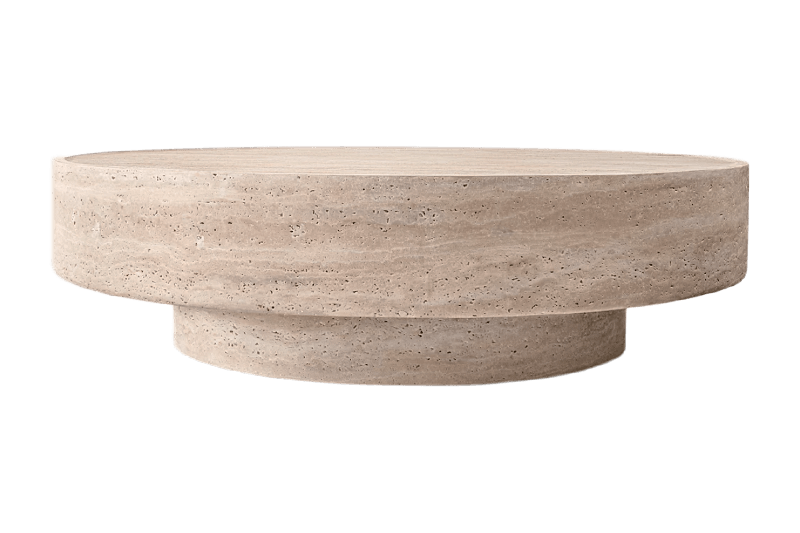 Warm Brown Laminated Marble Coffee Table
-
 Dark Brown Rock Marble Coffee Table
-
 Frosted Curved Marble Coffee Table
-
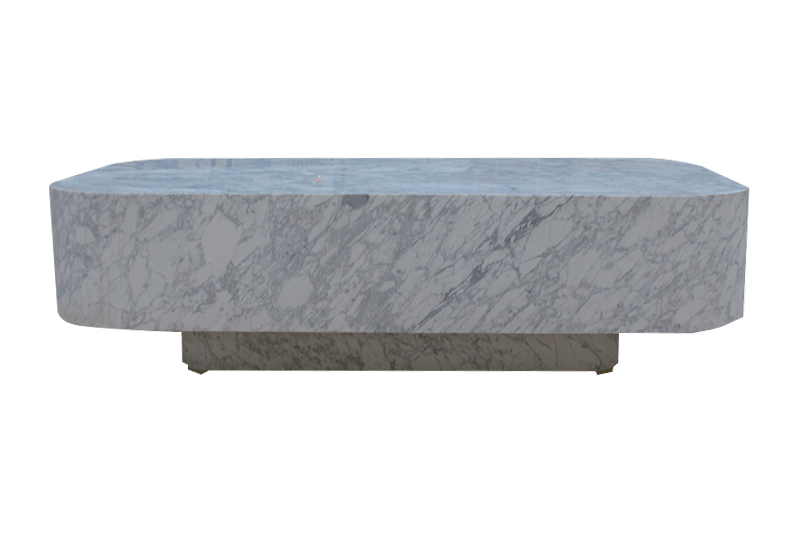 Ice Blue Jade Marble Coffee Table
-
 Gray-Toned Couch And Marble Coffee Table
-
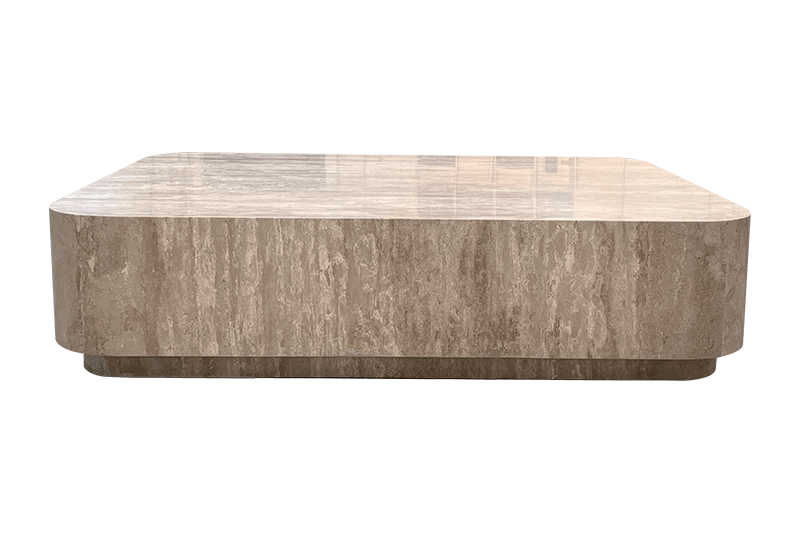 Light Brown Marble Coffee Table With Square Base
-
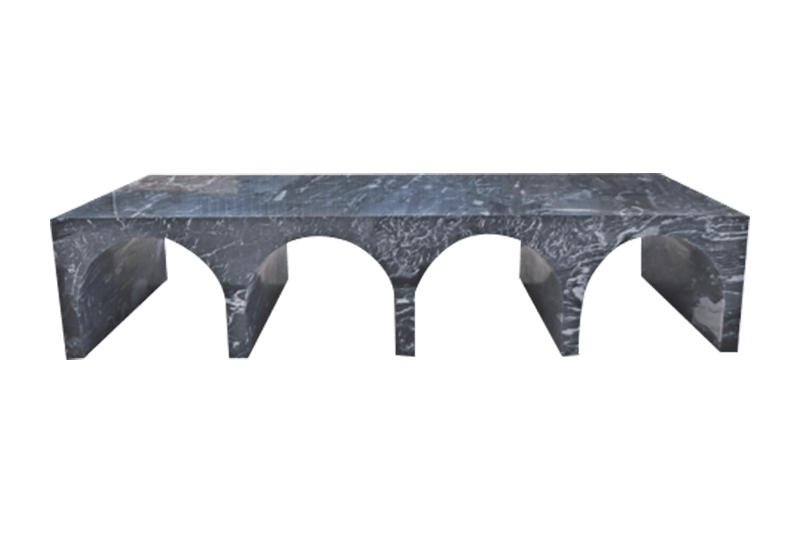 Dark Grey Arcade Marble Coffee Table
-
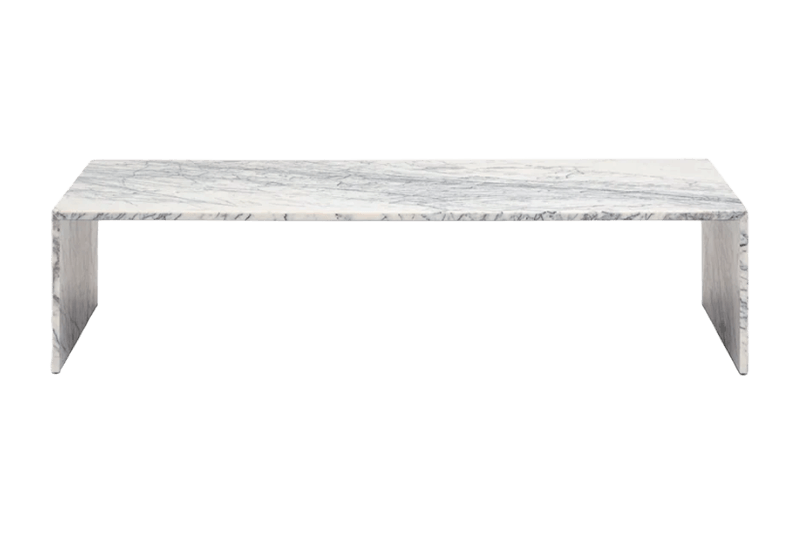 Silver And White Marble Coffee Table
-
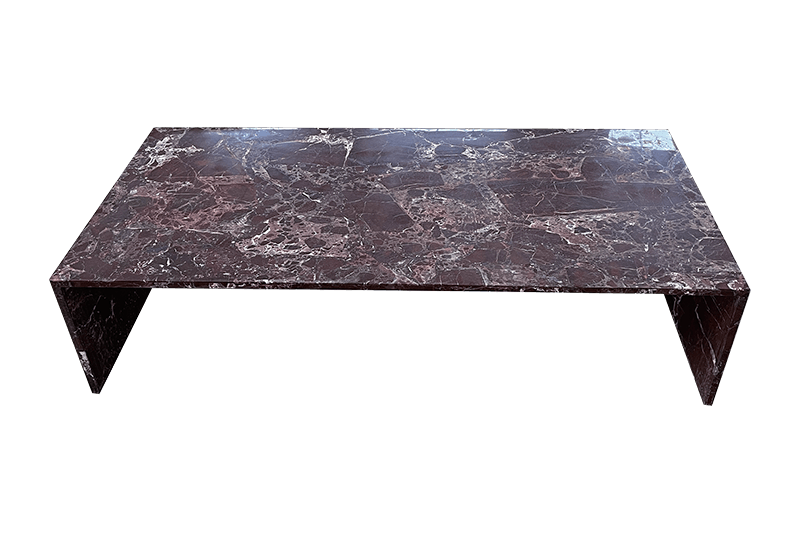 Burgundy Ridge Marble Coffee Table
-
 Colorblock Layered Marble Coffee Table
-
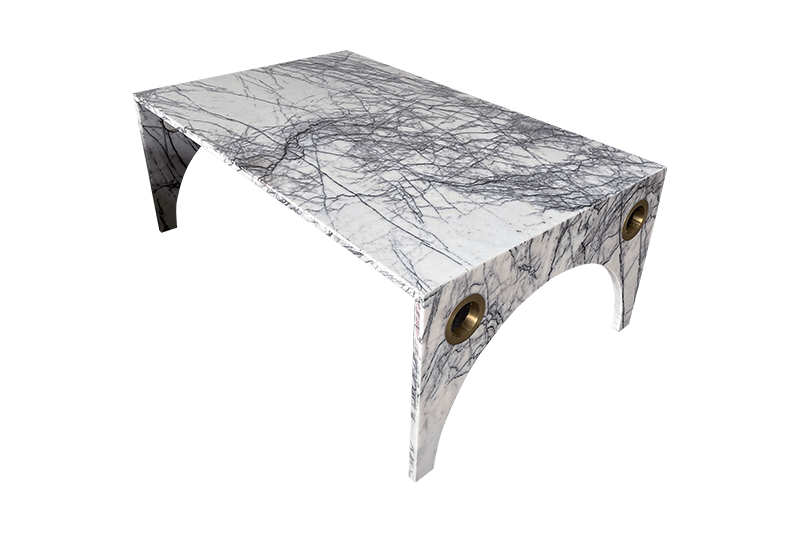 Silver-Patterned Marble Table
-
 Light Gray Square Marble Coffee Table
As a key piece of furniture in the living room, a marble coffee table not only serves practical functions but also serves as a focal point for interior decor. Its luxurious texture and refined appearance captivate every visitor, allowing them to pause and sense the owner's unique taste and approach to life. Marble itself exudes a sense of nobility, with its smooth surface and unique texture making each marble coffee table a work of art. Whether it's classic white marble or profound black marble, it adds a touch of elegance and grandeur to any space. Marble coffee tables are typically simple and elegant in design, featuring geometric lines and refined metal fittings. Paired with modern decor, they blend seamlessly with a variety of styles. Choosing a high-quality marble coffee table not only enhances the visual depth of your home but also reflects your commitment to quality of life, showcasing your taste and style.
Message Feedback
Company
Nantong Yunju New material Technology Co., Ltd.
News
-
Picture this: you walk into a stone showroom and run your hand over a polished marble tile. It looks elegant, but a dozen questions race through your mind. Will it scratch? Is it slippery? How much work is it to keep clean? Those are fair concerns. Marble floor tile can be a durable, long-lasting choice when you match...
READ MORE -
A marble dining table is one of the few pieces of furniture that changes character with the time of day. The same slab reads cool grey in the morning, warm cream under a pendant light, and almost metallic at night. That visual range is exactly why so many buyers choose by appearance alone, then discover six months lat...
READ MORE -
A marble console table usually occupies one of the most exposed positions in a home: the entryway wall, the end of a hallway, or the space behind a living room sofa. It is the first surface guests notice when they enter, and it carries everyday objects such as keys, mail, and decorative trays. Choosing the right one t...
READ MORE
Marble Coffee Table Industry knowledge
Design Versatility and Geometric Configurations in Modern Marble Coffee Table Fabrication
Standard Rectangular and Square Configurations
Rectangular and square formats represent the foundation of traditional furniture design, providing functional stability and predictable spatial footprint within living room layouts. In conventional stone processing, these shapes are achieved by cutting solid 20mm to 30mm marble slabs into precise geometric dimensions. While heavy, these classic shapes offer a broad surface area suitable for large sectionals and formal seating arrangements. The reliance on rigid, thick stone slabs often limits these tables to linear edge profiles, as the substantial weight of solid marble prevents complex carving or delicate leg attachments without heavy-duty internal structural reinforcement.
Modern manufacturing methodologies have expanded the creative potential for these classic shapes through composite stone engineering. By utilizing ultra-thin natural stone veneers bonded to lightweight substrates such as aluminum honeycomb or high-density fiberboard, furniture designers can create rectangular and square tabletops that maintain the authentic aesthetic of natural rock while shedding nearly eighty percent of the traditional weight. Companies such as Nantong Yunju New Material Technology Co., Ltd., based in Haian, Jiangsu, employ advanced R&D to stabilize these thin stone sheets, allowing for wider table spans and minimalist framing systems that would otherwise be impossible with dense, full-thickness slabs.
Organic Curvilinear and Elliptical Table Designs
Curvilinear shapes—including round, oval, and kidney-shaped silhouettes—bring visual softness to interior spaces characterized by hard architectural lines. Producing these forms from traditional solid stone involves labor-intensive CNC milling and expensive abrasive water-jet cutting to navigate the brittle nature of heavy marble blocks. The resulting pieces remain susceptible to edge chipping during shipping and installation due to the lack of internal tensile support within the natural stone matrix.
The introduction of flexible stone composite technology enables a wider array of organic coffee table geometries. By laminating 1mm to 3mm stone slices onto bendable resin meshes, fabricators can wrap natural stone around curved edges and cylindrical table bases with ease. This innovation allows designers to produce fluid, asymmetrical, and circular marble coffee table tops that exhibit consistent vein flow across the perimeter. Nantong Yunju New Material Technology Co., Ltd. leverages these specialized processing techniques to provide lightweight stone veneers that conform to non-linear furniture designs, effectively bridging the gap between natural mineral aesthetics and contemporary industrial design trends.
| Shape Category | Geometric Characteristics | Best Spatial Application | Fabrication Complexity |
|---|---|---|---|
| Rectangular | Defined linear edges and right angles | Large living areas with long sofas | Low (Standard saw cutting) |
| Circular / Round | Equidistant perimeter from center | Compact conversational seating zones | High (CNC or water-jet precision) |
| Oval / Elliptical | Elongated curves, tapered ends | Flow-oriented layouts; high-traffic paths | Moderate-High (Edge finishing requirements) |
| Freeform / Organic | Irregular, natural fluid boundaries | Statement centerpieces; eclectic decor | High (Custom template fabrication) |
| Nested (Multi-Shape) | Layered geometric volumes | Versatile, space-saving arrangements | Moderate (Requires weight management) |
Modular and Multi-Tiered Geometric Stacking
Nested and multi-tiered table systems utilize varied geometric shapes to create depth and functional flexibility within a single footprint. These designs typically involve smaller secondary tables that slide beneath or sit adjacent to a primary larger table. When manufactured using traditional stone, the combined weight of multiple solid marble components often creates logistical challenges for home assembly and floor protection. Consequently, multi-tiered stone furniture has historically been reserved for boutique, high-end applications with significant structural backing.
Lightweight composite stone panels transform this design category by decoupling surface area from total mass. A multi-tiered marble coffee table set using ultra-thin stone can now feature delicate metallic or timber frames that support two or three levels of stone surfaces without risk of structural fatigue. Because the total weight remains low, these nested configurations are practical for daily domestic use. Enterprise operations at Nantong Yunju New Material Technology Co., Ltd. support the creation of these complex furniture systems by providing high-consistency thin stone sheets that match across different geometric sizes, ensuring that the marble grain flows visually from one tier to the next.
Edge Profiling as a Geometric Design Element
The perceived shape of a coffee table is defined not only by its footprint but also by its edge profile. Solid stone tables are typically restricted to simple eased or beveled edges due to the difficulty of polishing complex stone curvatures without specialized heavy-duty equipment. In contrast, modern ultra-thin stone veneer technology allows for mitered edge joining, where the thin veneer is wrapped over the edge of a lightweight substrate to create a seamless, thick-look finish.
This fabrication method opens possibilities for waterfall edges, where the marble pattern continues vertically down the side of the table base, creating a continuous block-like appearance. Designers can also specify shark-nose, bullnose, or chamfered edges on composite marble coffee tables, as the underlying substrate can be shaped precisely before the stone veneer is applied. This capability allows a singular coffee table to adopt varied geometric characters—ranging from sharp, minimalist architectural forms to soft, tactile rounded perimeters—all while retaining the authentic mineral texture of natural marble.
| Edge Profile Type | Visual Characteristic | Material Composition Requirement | Suitability for Marble |
|---|---|---|---|
| Mitered Waterfall | Continuous grain flow over the edge | Composite-backed thin stone | High (Visual continuity) |
| Eased / Square | Sharp, linear transition | Solid slab or composite | Moderate (Prone to corner chipping) |
| Bullnose | Rounded, smooth curvature | Solid slab or shaped substrate | High (Tactile softness) |
| Beveled | Angled, decorative transition | Solid slab or composite | Moderate (Dust accumulation) |
FAQ
Q: How do composite ultra-thin materials prevent a marble coffee table top from chipping along its outer edges?
A: Solid stone table tops feature unreinforced, brittle perimeters that are highly vulnerable to chipping during everyday impacts. Modern composite construction laminates an ultra-thin stone veneer to a tough backing core, such as high-density fiberboard or aluminum honeycomb. This underlying substrate absorbs impact energy and provides structural flexibility, substantially protecting the edges against localized fracturing.
Q: What structural advantages does lightweight stone technology offer for multi-tiered or nesting marble coffee table configurations?
A: Nesting tables require frequent repositioning and rely on minimalist metal or timber frames. Utilizing ultra-thin stone reduces the overall top weight by up to 80 percent, preventing joint loosening, frame sagging, and floor scuffing while making the multi-layered table set easy to adjust within living rooms.
Q: How do producers like Nantong Yunju New Material Technology Co., Ltd. ensure visual grain alignment on waterfall-edge coffee tables?
A: Fabricators utilize high-precision miter-cutting on consecutive thin stone sheets extracted sequentially from the same quarried block section. Advanced lamination techniques developed by enterprise manufacturers ensure that the natural mineral veining flows seamlessly from the horizontal top surface down the vertical side panels without abrupt visual breaks.
Q: Will an ultra-thin marble coffee table handle daily thermal exposure from warm serving dishes or teapots?
A: Yes, natural stone maintains high inherent thermal stability. Because the stone veneer is thin and firmly bonded to heat-resistant backing layers, localized thermal energy dissipates quickly across the surface, preventing the scorch marks or surface cracking that often affect synthetic plastic laminates or delicate lacquered wood finishes.
Q: How do factory polymer impregnations protect an ultra-thin marble coffee table against coffee, juice, and wine spills?
A: During the specialized slicing and backing lamination phases, deep-penetrating resins fill the micro-fissures and microscopic pores naturally present in raw marble. Combined with topical sealants, this process forms a protective barrier that reduces liquid absorption rates and minimizes acid etching from routine household spills.
Q: Can ultra-thin stone technology be applied to custom curved or organic-shaped marble coffee table bases?
A: When backed with flexible polymer mesh or thin glass fiber layers, ultra-thin stone sheets gain flexural elasticity. This allows the natural stone veneer to be wrapped smoothly around cylindrical columns, elliptical table bases, and contoured silhouettes that would be impossible to cover with heavy, rigid stone slabs.
Q: What daily cleaning methods are required to maintain the original surface luster of an ultra-thin stone coffee table?
A: Maintenance requires wiping the surface using a soft microfiber cloth dampened with warm water and a neutral pH cleaner specifically formulated for natural stone. Avoiding harsh acidic household sprays, bleach, and abrasive scouring pads ensures that the factory sealant remains intact and the stone keeps its smooth tactile finish over time.
Yunju
Contact
-
 56 Ronggang Road, Binhai New Area, Laoba Port, Hai'an City, Nantong City, Jiangsu Province
-
 [email protected]
[email protected]

Mobile

Copyright ©Nantong Yunju New material Technology Co., Ltd.Rights Reserved.
 Custom Modern Round/Square Marble Coffee Table Suppliers