 English
 عربى
 Español
Marble has been a symbol of luxury and elegance for millennia, prized for its unique veining and tim...
READ MORE
Marble Home Customizer: How Thickness, Veining and Structure Decide the Piece
Content
Picture a designer sending a request for a 2.4 m dining table in warm white marble, two matching sideboards, and a console for the same hallway. The workshop's first reply has nothing to do with colour. It asks how the top will be built.
That question sets the tone for the whole project. A 30 mm solid slab measuring 2.4 m by 1.0 m leaves the factory at roughly 195 kg. The same top in 6 mm stone bonded to a composite panel lands near 26 kg, and it behaves differently at the edge, over the base and on the delivery truck.
A marble home customizer is, in practice, a decision sequence: structure first, stone second, finish third, paperwork last. Projects that run smoothly are the ones where buyer and workshop agreed to that order before a single slab was reserved.
What Customization Actually Covers
Showroom furniture is built to fixed sizes. Custom work reverses the flow: the drawing comes first and the stone is cut to fit it. In a plant set up for thin-stone processing, six variables get fixed in the first two meetings.
- Dimensions and unsupported span, including where the base can sit without blocking chair legs.
- Build-up: stone thickness plus substrate, whether a solid slab or a veneer bonded to aluminium honeycomb or a composite panel.
- Base geometry and footprint, since a central column needs a steel core and twin pedestals must be height-matched to within about 1 mm.
- Edge profile, where a 30 to 50 mm built-up return often gives the look of thickness while the field stays light.
- Veining strategy and slab reservation, from a single asymmetric slab to a numbered sequence across a room.
- Finish and sealing: polished deepens dark stones, honed hides fingerprints better, brushed suits floors and wall panels.
Anything left open here turns into a change order later, and change orders on stone are expensive because the material has already been cut.
Thickness, Weight and Span: The Numbers That Decide Everything
A 20 mm solid marble top works comfortably across spans up to about 1.6 m between supports. Push past that and the options narrow to three: bring the base inward, add a steel sub-frame, or switch to a composite build-up. The chart below shows why weight, not appearance, so often drives the choice.
Composite build-ups are not a downgrade. They are a different engineering answer to the same brief, and they open shapes that a solid slab simply cannot hold, as covered in this overview of marble composites.
| Piece | Typical top build-up | Support structure | Main risk to control |
|---|---|---|---|
| Dining table, 1.8 to 2.4 m | 20 to 30 mm solid, or 6 to 10 mm stone on composite | Central column with steel core, or twin pedestal | Mid-span deflection; edge chipping on thin profiles |
| Console or entry table | 15 to 20 mm solid, often with a built-up edge | Slim steel frame or wall bracket | Overturning if the footprint is too narrow |
| Coffee table | 15 to 20 mm solid on a hidden frame | Hidden aluminium or steel sub-top | Corner impact on unsupported overhangs |
| Cabinet or sideboard | 10 to 12 mm stone panels on an 18 mm carcass | Reinforced hinges and back rail | Door alignment; hinge pull-out under stone weight |
| Wall panel or flooring | 6 to 10 mm on composite backing | Mechanical fixing plus adhesive | Flatness of the substrate; joint tolerances |
A Specification Sequence That Avoids Rework
Thin-stone processors handle hundreds of drawings a year, and the same order of work keeps the numbers honest. This is the sequence worth following on any custom piece.
- Fix the drawing and the span, including the exact base footprint, before discussing stone.
- Select the build-up and state the total weight so shipping and floor loading can be checked.
- Reserve the slab or bundle, and record the block number on the drawing.
- Agree the edge profile and the visible build-up, since a 40 mm apparent edge on a 10 mm field is a joint, not a solid block.
- Set tolerances in writing: roughly plus or minus 1 mm on visible joints and plus or minus 2 mm on overall length is workable for most residential pieces.
- Approve a physical sample of stone, finish and edge, then require a dry-fit photo before crating.
Step five is the one buyers most often skip. A tolerance that lives only in a phone call tends to reappear as a dispute at installation, when the stone cannot be recut and the schedule has already been published.
How Vein Matching Changes the Order
The same block can produce four very different outcomes depending on how it is cut. Book-matching mirrors adjacent slabs, which suits symmetrical dining tops and feature panels but doubles the visible seam count. Four-piece matching spreads one pattern across a larger surface and demands a flat, well-lit setting to read properly. Sequence matching numbers every slab so a hallway, a console and a sideboard all carry continuous movement.
Matching always costs material. Budget an extra 15 to 25 percent when mirrors or sequences are specified, and insist that the reserved slabs stay tied to the project number until installation. On a recent multi-piece hallway set, the console and the cabinet fronts were cut from the same bundle precisely so the grey veining ran in one direction at eye level.
What to Customize in Each Furniture Type
Dining tables and consoles
Length, base spread and edge height do most of the work. A double-pillar base reads lighter than a solid plinth and leaves chair clearance on all four sides, while a console gains presence from a narrow, thick-looking edge rather than from a wide top. Check the column-to-top fixing detail before ordering, since a table that flexes will eventually loosen its joints.
 Elegant White Double-Pillar Marble TableA rectangular marble-top table on two square columns, offered in two sizes and suited to living, study or dining settings.View Product →
Cabinets and sideboards
Stone doors are heavy, so hinge rating, back-rail support and door alignment matter more than the drawer pattern. Ask for the carcass material and the fixing method in writing; a 12 mm stone front on an 18 mm carcass is a sensible default for residential storage.
 Patterned Marble Bathroom Cabinet with Double-Door StorageA beige patterned marble bathroom cabinet with double-door storage and overhead lighting, designed for humid bathrooms and modern minimalist interiors.View Product →
Coffee tables and side tables
These pieces carry the most handling risk and the least structural margin. Rounded or chamfered edges survive daily contact better than a sharp 90-degree arris, and any cantilever beyond about 150 mm should have a hidden frame beneath it.
 Stacked Bulgari Column Marble Corner TableA side table formed from two stacked marble cylinders, adding layered color and texture beside a sofa or in a living room corner.View Product →
Failure Points Worth Writing Into the Spec
Most complaints trace back to a handful of predictable issues rather than to the stone itself.
- Edge chipping on thin profiles, usually from packing rather than production.
- Deflection on long tops, visible as a hairline gap under a straightedge.
- Moisture staining on light stones that were sealed only after installation.
- Colour drift between pieces cut from different bundles of the same name.
- Weight surprises at the loading dock, where a crate exceeds the tail-lift rating.
Each one is cheap to prevent at the drawing stage and costly to correct afterwards.
Nantong Yunju New Material Technology, based in Haian, Jiangsu, has focused on ultra-thin stone since 2021, running more than 30 sets of special-purpose equipment and a workforce that includes 6 thin-stone technicians and 5 quality inspectors. Annual output of around 300,000 square metres supports a customer base of more than 20 furniture manufacturers, alongside design institutes and decoration contractors.
That capacity matters less than the sequence it enables: drawing, build-up, slab reservation, edge approval, dry fit, crating. Buyers who follow it get a piece that looks like the render and arrives in one piece. Those who start with the colour usually revisit the drawing twice. Browse the marble home furnishings range to see how those build-ups translate into finished tables, cabinets and seating.
PREV:No previous articleNEXT:Marble Home Customization: How to Choose a Marble Home Furnishing Manufacturer
Interested in cooperation or have questions?
Related Products
-
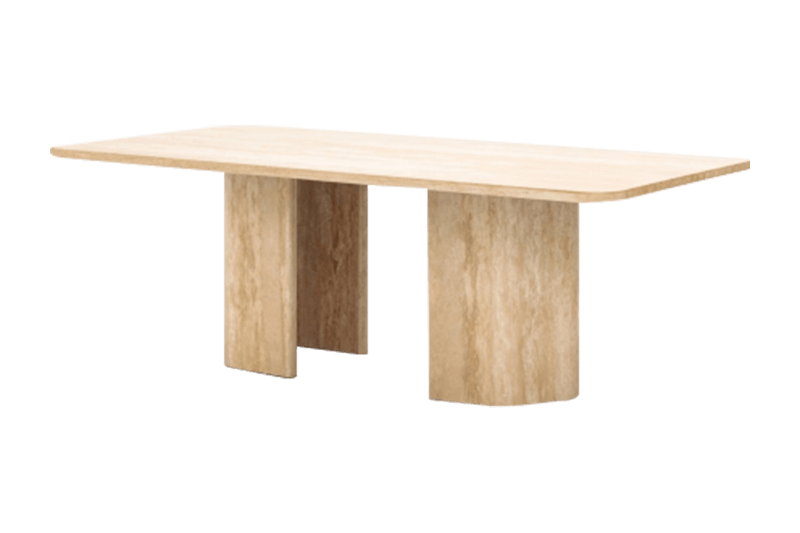 Elegant Travertine Marble Dining Table View More


-
 Chenghuaiya Stone Travertine Dining Table View More
-
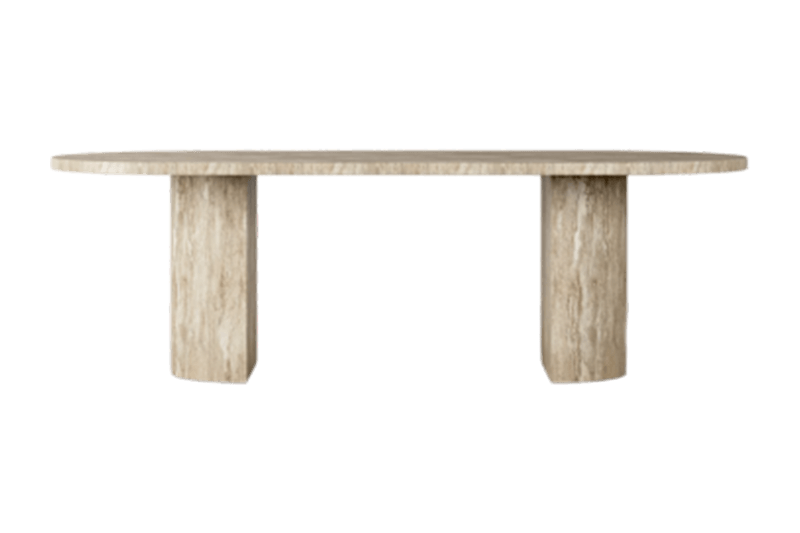 Elegant Cloud Shadow Travertine Dining Table View More
-
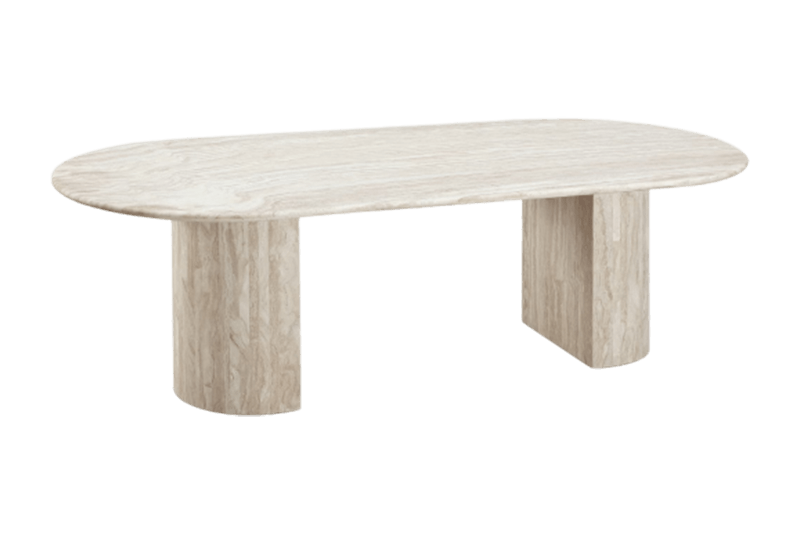 Light and Shadow Travertine Dining Table View More
-
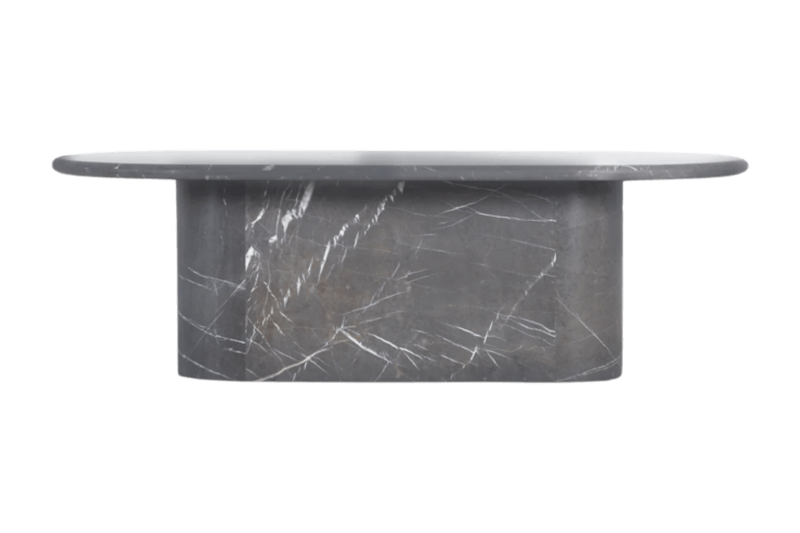 Simple Dark Grey Stone Dining Table View More
-
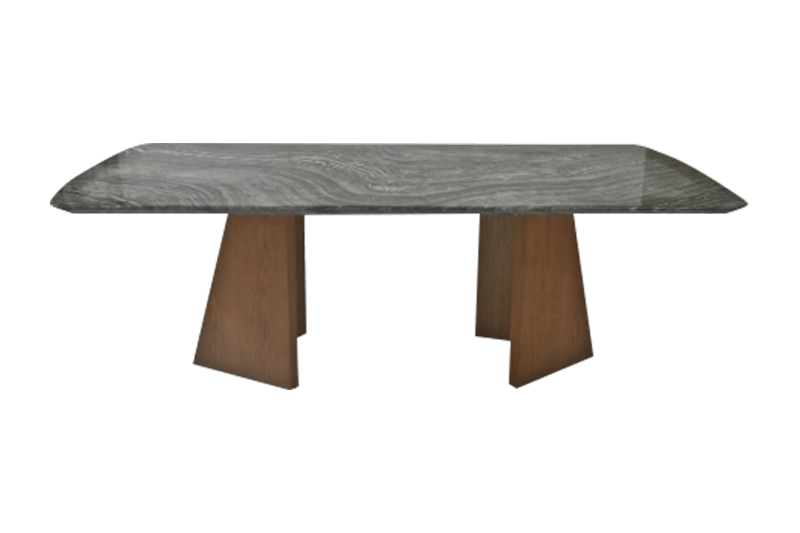 Gray Wood-Tone Marble Dining Table View More
-
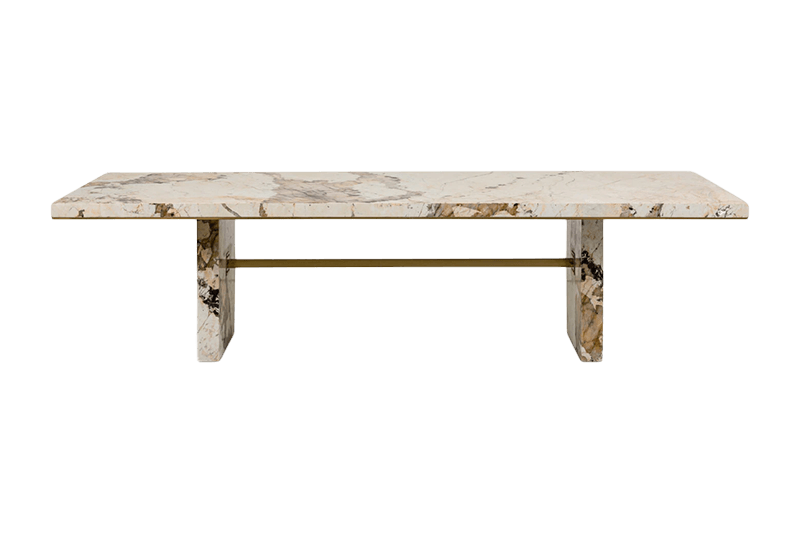 Off-White Gilded Marble Long Table View More
-
 EstéE Lauder Oval Marble Dining Table View More
-
 Rock Ash Cave Moon Mark Marble Rock Table View More
-
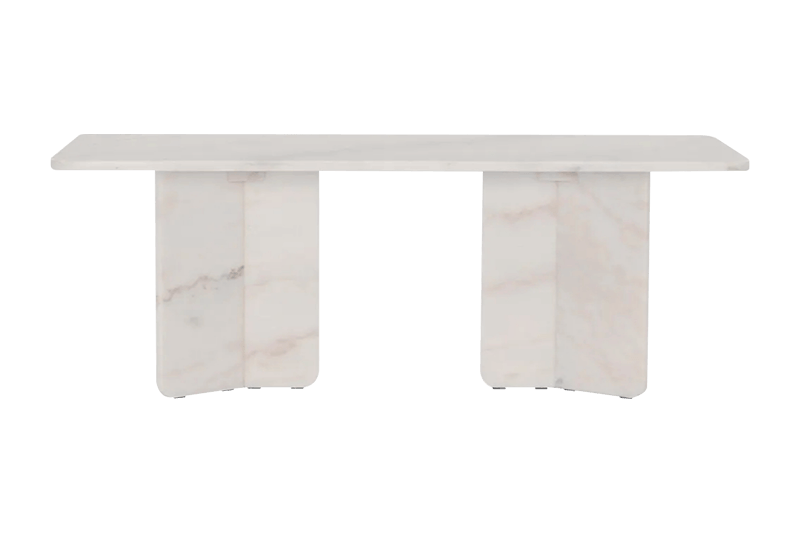 Elegant White and Refreshing Double-Pillar Marble Table View More
-
 Oval Marble Round Table with Large Floral and White Cloud Pattern View More
-
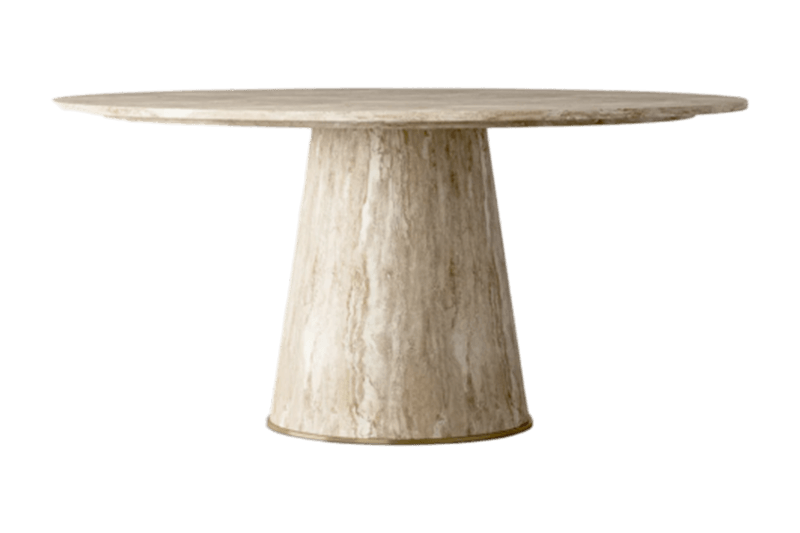 Simple Roman Hollow Marble Table View More
News
-
-
Marble Home Furnishings including a natural marble bathtub, natural marble fireplace, and marble bat...
READ MORE -
When you compare marble home furnishings, start with construction rather than appearance. The most ...
READ MORE -
Picture this: the sofa is in place, the rug matches the wall color, and the lighting finally feels ...
READ MORE -
Specifying a marble side table often begins with a simple question: will it feel solid or fragile w...
READ MORE -
Price a marble wall panel for a hotel lift lobby and the figure that usually breaks the budget is n...
READ MORE
Yunju
Contact
-
 56 Ronggang Road, Binhai New Area, Laoba Port, Hai'an City, Nantong City, Jiangsu Province
-
 [email protected]

Mobile

Copyright ©Nantong Yunju New material Technology Co., Ltd.Rights Reserved.
 Custom Marble Composite Furniture Manufacturers