 English
 عربى
 Español
When you compare marble home furnishings, start with construction rather than appearance. The most ...
READ MORE
Marble Home Customization: How to Choose a Marble Home Furnishing Manufacturer
Content
Your customer wants a marble dining table with a three-meter top, two curved pedestals, and a book-matched vein pattern that continues across the surface. A conventional 20 mm slab can deliver the top, but the curved edge would need heavy steel framing, and the complete piece might be too heavy to move into place. That is the moment when custom marble home furnishing stops being a stone-buying decision and becomes a manufacturing-engineering decision.
For interior designers and furniture brands, this is the point where a project either gets resolved or stalls. The samples look beautiful, but the factory keeps asking for drawings without commenting on structural feasibility.
The conclusion is simple: the custom marble home furnishing manufacturer you choose must be able to work with thin stone, bond it to a stable composite core, handle complex geometry, and maintain consistent quality over multiple units. These capabilities determine whether a custom marble piece looks spectacular or becomes a maintenance problem.
What Custom Marble Home Furnishing Actually Includes
Custom marble furniture is not just selecting a slab. In a production environment, the real definition includes six decisions:
- Stone species and vein matching
- Dimensions and overall geometry
- Surface finish, from polished to honed
- Edge and profile treatment
- Structural core and support system
- Functional details such as rotation, storage, or hidden fasteners
For example, a polished finish may be right for a tabletop, but a honed or brushed finish is often more practical for cabinet doors because it hides fingerprints and fine scratches.
Each decision changes how the stone is cut, supported, and protected. The difference between a beautiful marble piece and one that fails early is usually in the details of the composite structure beneath the surface.
Why Thin Stone and Composites Are the Real Enabler
Traditional marble processing treats stone as a structural slab. Thin-marble technology treats natural stone as a surfacing material. This distinction affects thickness, weight, and shape possibilities.
In practice, the difference shows up as early as material selection. A solid 20 mm stone piece can feel monumental, but it forces the designer to plan for high floor loading and reinforced bases. A thin natural stone layer over a composite core keeps the visual identity of marble while making it behave more like a furniture-grade panel. This is why the table below is not just a technical comparison; it is the basis of design strategy.
| Decision | Conventional thick stone | Thin marble + composite |
|---|---|---|
| Thickness | Usually 15-30 mm | Typically 2-6 mm marble layer on a composite core |
| Weight | Heavy, often requires steel supports | Lighter, easier for furniture frames |
| Curved or sculptural shapes | Difficult, high risk of cracking | Possible with controlled bending and lamination |
| Edges and profiles | Limited to standard machined edges | Can wrap around curved corners or integrate with metal |
| Application range | Tabletops, floors, wall cladding | Cabinet doors, curved panels, chair shells, table bases |
Because the stone is thin, manufacturers can bond it to curved substrates, aluminum honeycomb, fiberglass, or wood-based panels. That opens shapes that would be too fragile in solid stone, and it reduces the need for heavy steel frames. This does not mean all marble furniture should be ultra-thin. Heavy monolithic pieces still have their place. But when the brief calls for curves, tight radii, or lightweight structures, the manufacturing route becomes the key decision. The way veins run through natural stone has a direct impact on where cuts and joints should go. For a deeper look at this issue, see how marble veining shapes cutting decisions.
What to Look for in a Marble Home Furnishing Manufacturer
Not every stone workshop can deliver a custom marble piece reliably. The following points separate a true furniture manufacturer from a slab reseller:
- Thin-stone processing equipment and lamination experience
- A formal prototype and sample approval process
- Dedicated quality inspection before shipment
- Existing supply relationships with other furniture brands
- Enough capacity to move from sample to batch production
The first question is whether the factory actually controls the lamination process. Some workshops buy prefabricated thin-stone panels; others make their own composite boards. The second approach gives more control over edge treatments and dimensional tolerance, which is critical when a marble panel must align with a wood drawer or a metal leg.
A practical example of a thin-stone furniture team is shown below. Nantong Yunju, for instance, operates with a team that includes six thin-stone technicians, fifty skilled workers, and five quality inspectors.
Skilled workers
50
Thin-stone technicians
6
Production managers
6
Quality inspectors
5
Sales staff
5
On the production side, a balanced team suggests that the factory has a repeatable process rather than relying on one master craftsman. That matters when you need twenty identical cabinets instead of a single prototype. These numbers matter because custom work often combines development, batch production, and inspection. A team with separate QC staff is more likely to catch cracks, color variation, and edge defects before shipment.
A Realistic Workflow for a Custom Order
Before the workflow starts, ask what the factory needs from you. A good custom order begins with accurate drawings: plan view, elevations, section details, and any tolerances for doors or drawers. If you only have reference images, the factory should help translate those into technical drawings.
A typical custom marble furniture order then follows a repeatable sequence:
- Share drawings, dimensions, and reference photos.
- Select stone and confirm vein pattern; the manufacturer can suggest alternatives based on stock.
- Approve a sample or prototype before mass production.
- Production and composite lamination.
- Final quality inspection and packing.
Most factories will also provide a production schedule after sample approval. Confirm whether the schedule includes stone slab selection, lamination time, edge processing, and final assembly. Gaps in that sequence often cause delays.
Make sure the factory defines who is responsible for each step. The best custom orders happen when the stone is cut and matched according to the furniture’s geometry, not as an afterthought.
Where Custom Marble Pieces Add the Most Value
Marble customization adds practical value in places where conventional stone is too heavy or too rigid. The strongest results are usually in these areas.
The value of customization is highest when the design has to solve a spatial problem: an angled staircase landing, a narrow entryway, or a living room with no visible supporting wall. Custom dimensions let the piece fit the architecture rather than the other way around.
Living room statement pieces
Curved coffee tables with continuous vein patterns are a growing category. Ultra-thin marble allows the top and outer edge to be wrapped in one visual flow instead of a straight cut with visible joints. For smaller rooms, nesting tables and cylindrical side tables offer the same premium look without dominating the space.
 Bulgari Cloud Shadow Double Curved Marble Coffee TableThe bulgari cloud shadow double curved marble coffee table features a round top with a natural blue and white veining and a unique double-curved support structure.View Product →
Dining room anchors
A dining table is often the largest single marble element in a home. Customization may mean a rotating two-layer top, a sculptural column base, or an oversized oval top that requires careful book-matching. Because of the span involved, the composite core must be dimensionally stable.
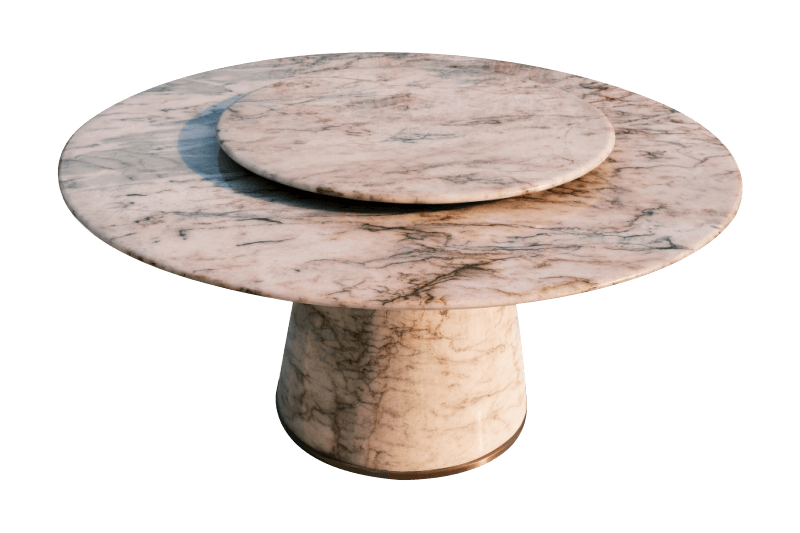 Patterned Rotating Double-Layer Marble TableThis patterned rotating double-layer marble table features a round top and a turntable. Crafted entirely from green marble, it features a tapered base with metal trim around the edges. View Product →
Entryways, sideboards, and storage
Consoles and cabinets benefit from thin marble because they can integrate stone surfaces with wood or metal frames without overloading the structure. Even a narrow console table can carry a dramatic marble top if the base is designed for the weight.
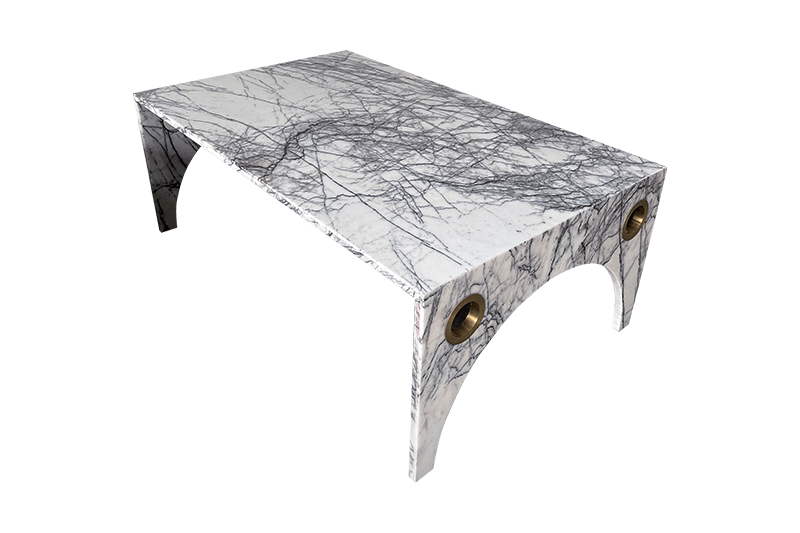 Double - Arc Silver - Gray Marble TableThe "double-arc silver-gray marble table" is a modern and elegant furniture piece featuring a curved silver metal frame and a gray marble tabletop, showcasing a unique texture and refined craftsmanship.View Product →
The Manufacturer as a Material Partner
In a material-partner model, the manufacturer participates early. They tell you whether a joint should be moved, whether a curved edge needs a metal insert, how much veining variation to expect, and what size pieces are realistic for the stone you have chosen.
Finally, treat your marble home furnishing manufacturer as a material partner rather than a cutting service. A specialist that supplies more than twenty furniture manufacturers, as Nantong Yunju does, already understands how to balance texture, thickness, structure, and cost. It is the difference between “can we cut this” and “can we repeat this reliably in production.”
For a direct view of how such a factory organizes its work, you can browse the manufacturer’s homepage.
The bottom line: custom marble home furnishing is not about buying a more expensive slab. It is about finding a manufacturer with thin-stone processing, composite lamination, and quality control that can turn a design into a durable piece. Evaluate those capabilities first, and the stone will do the rest. For buyers who know these questions, custom marble becomes a reliable option, not a gamble.
PREV:No previous articleNEXT:How to Choose a Marble Processing Factory: 7 Critical Factors for Quality and Reliability
Interested in cooperation or have questions?
Related Products
-
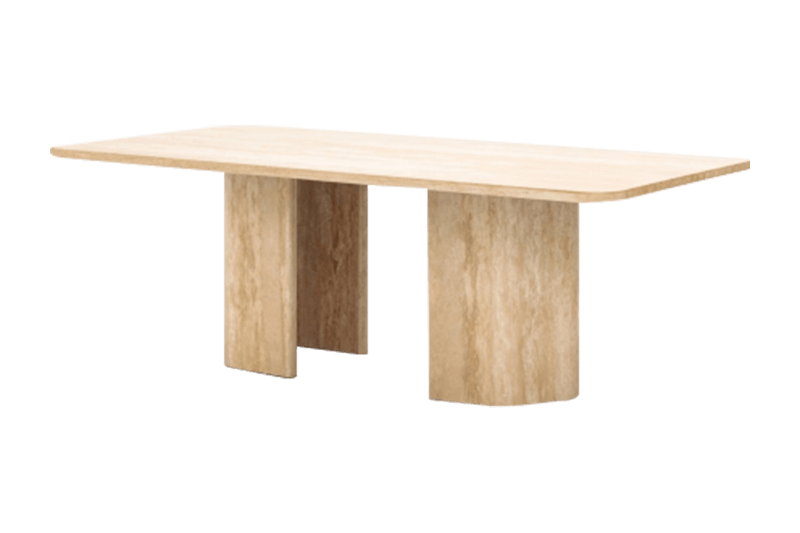 Elegant Travertine Marble Dining Table View More


-
 Chenghuaiya Stone Travertine Dining Table View More
-
 Elegant Cloud Shadow Travertine Dining Table View More
-
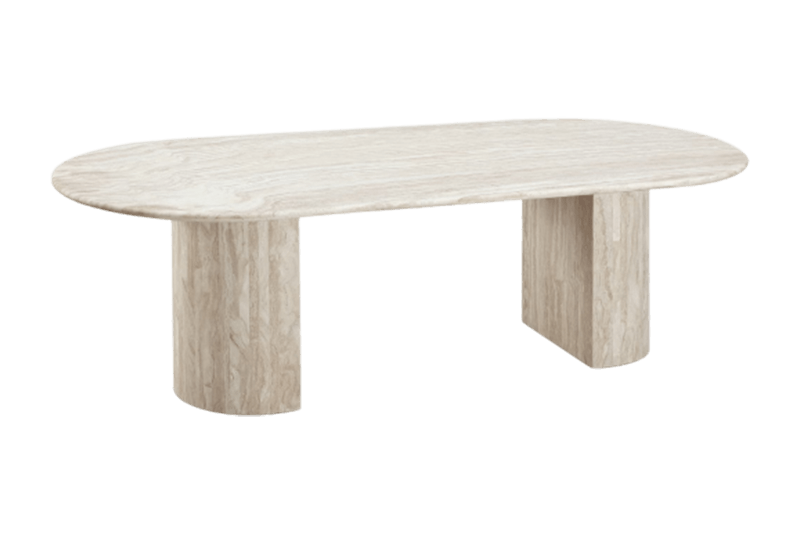 Light and Shadow Travertine Dining Table View More
-
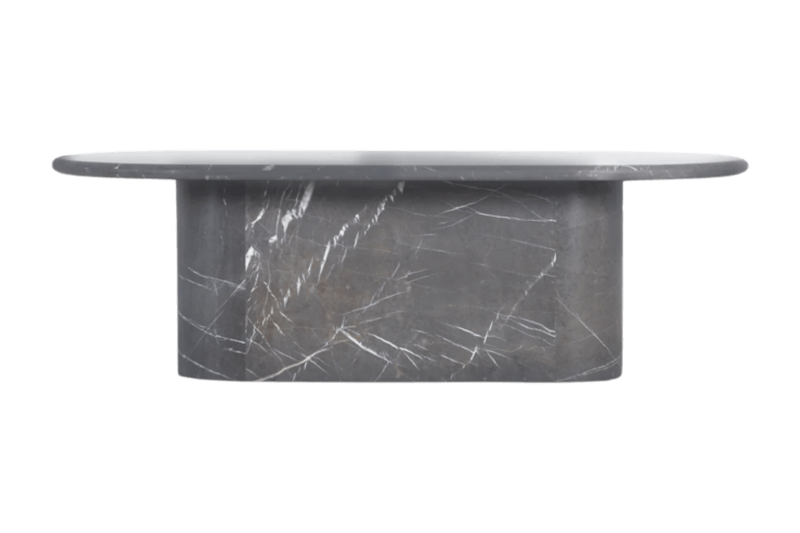 Simple Dark Grey Stone Dining Table View More
-
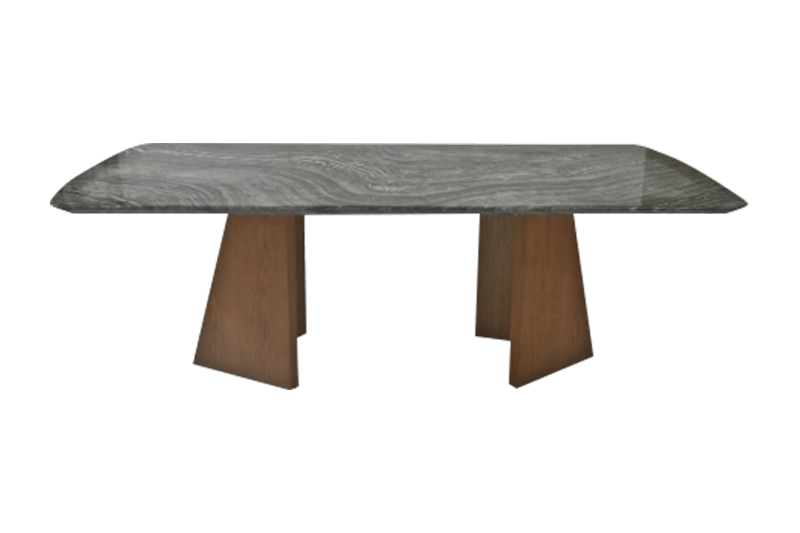 Gray Wood-Tone Marble Dining Table View More
-
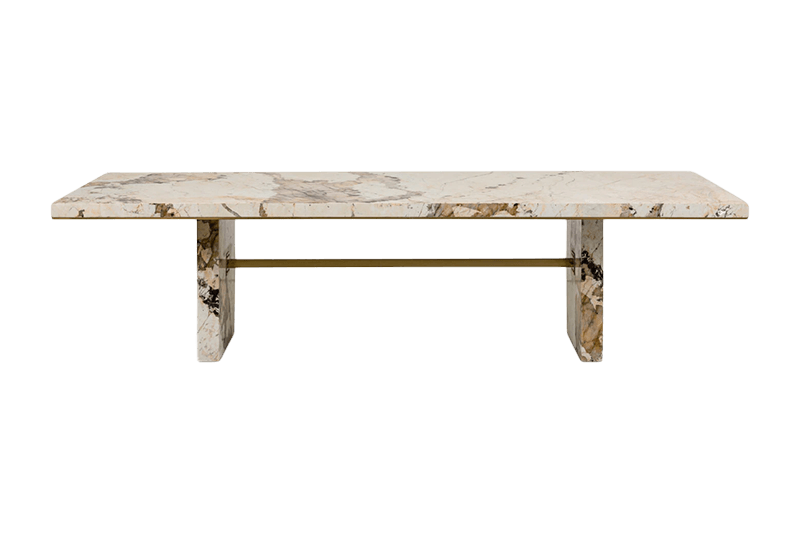 Off-White Gilded Marble Long Table View More
-
 EstéE Lauder Oval Marble Dining Table View More
-
 Rock Ash Cave Moon Mark Marble Rock Table View More
-
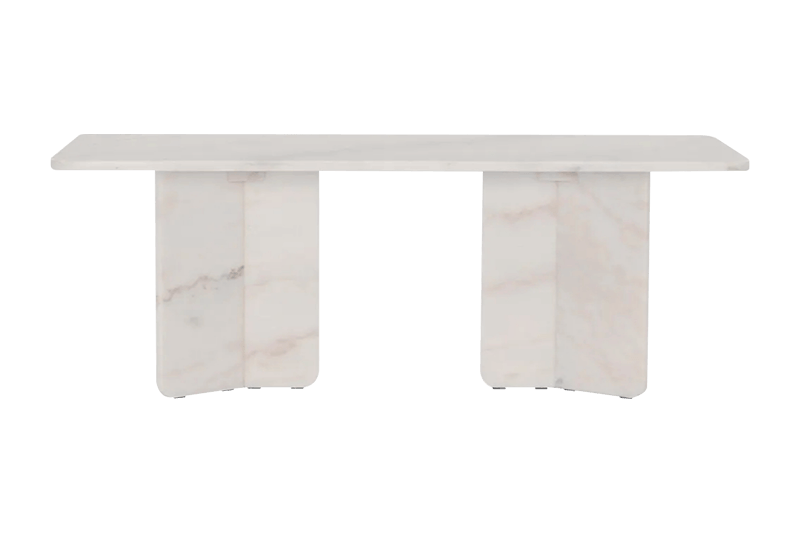 Elegant White and Refreshing Double-Pillar Marble Table View More
-
 Oval Marble Round Table with Large Floral and White Cloud Pattern View More
-
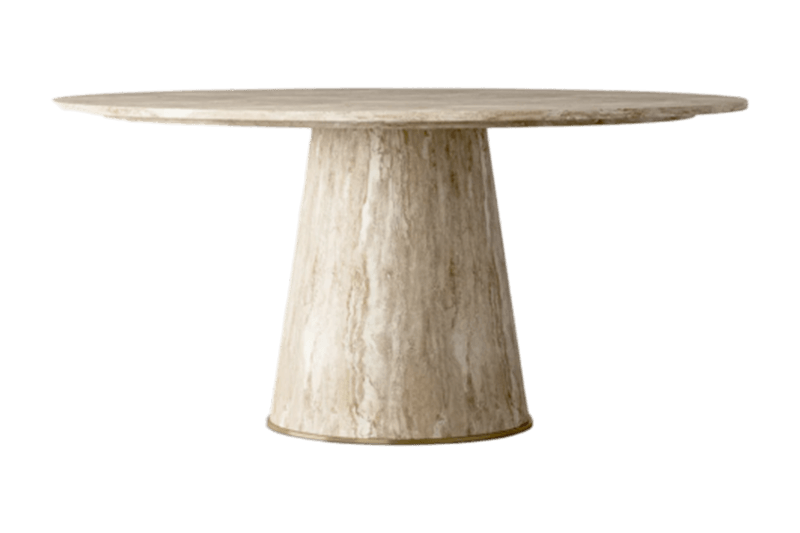 Simple Roman Hollow Marble Table View More
News
-
-
Marble Home Furnishings including a natural marble bathtub, natural marble fireplace, and marble bat...
READ MORE -
Picture this: the sofa is in place, the rug matches the wall color, and the lighting finally feels ...
READ MORE -
When you are planning a hotel lobby renovation or launching a new line of stone furniture, the marb...
READ MORE -
A marble dining table is one of the few pieces of furniture that changes character with the time of...
READ MORE -
Twelve percent of a furniture brand's first container of marble tabletops arrived with hairline cra...
READ MORE
Yunju
Contact
-
 56 Ronggang Road, Binhai New Area, Laoba Port, Hai'an City, Nantong City, Jiangsu Province
-
 [email protected]

Mobile

Copyright ©Nantong Yunju New material Technology Co., Ltd.Rights Reserved.
 Custom Marble Composite Furniture Manufacturers