Picture this: you walk into a stone showroom and run your hand over a polished marble tile. It look...
READ MORE
Marble Dining Table Guide: Stone Types, Durability, Cost and Smart Buying Tips
Content
- 1 Choose the Stone Type Around Your Daily Routine, Not Just the Sample
- 2 Base, Edge Work, and Engineering: The Parts You Cannot Judge from a Photo
- 3 Thin Marble Composite Tables: The Practical Middle Ground
- 4 The Two-Minute Showroom Checklist
- 5 Sizing, Shape, and the Space Around the Table
- 6 A Ten-Minute Care Routine That Protects the Surface
A marble dining table is one of the few pieces of furniture that changes character with the time of day. The same slab reads cool grey in the morning, warm cream under a pendant light, and almost metallic at night. That visual range is exactly why so many buyers choose by appearance alone, then discover six months later that the base flexes, the surface has etched around the lemon dressing, or the table rocks gently on an uneven floor. The fix is to move through three decisions in order: how the table will actually be used, which stone type matches that use, and whether the base and edge construction can carry the weight.
Here is the short conclusion: a marble dining table is a sound purchase for most households when the top is either a sufficiently thick solid slab or a thin marble composite with a rigid substrate, when the base is built to handle the top's real weight, and when you accept that natural stone will develop a light patina over time. Every recommendation below is aimed at getting those three conditions right.
Choose the Stone Type Around Your Daily Routine, Not Just the Sample
Real marble is a calcite-based metamorphic stone, and calcite is chemically reactive. Acid from wine, tomato, lemon juice, and even some salad dressings can cloud a polished surface if it sits for more than a few minutes. That is not a manufacturing defect; it is the physical nature of the stone. The useful question is not “is marble durable?” but “which stone and finish can I live with?”
Carrara white marble is the most common dining table stone because of its bright background and soft grey veining. With a polished finish it shows etching and fingerprints quickly; with a honed finish it hides daily marks far better and still looks like classic marble. The trade-off is that honed stone needs slightly more frequent sealing.
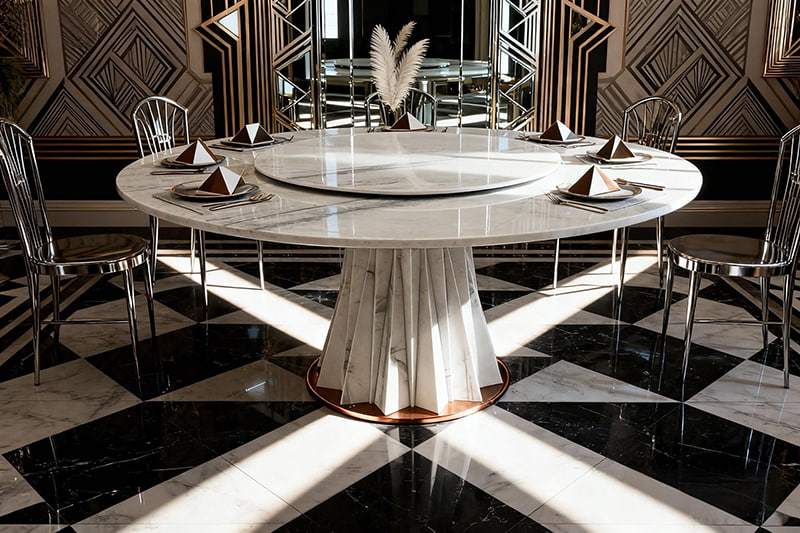 Carrara White Crinkled Moire Marble Dining Table with TurntableThis round Carrara marble table combines a crinkled base and a built-in turntable, making it a practical choice for family meals while showcasing the natural cloud-like veining typical of white marble.View Product →
Travertine is a different material entirely, although furniture listings often group it with marble. It forms around hot springs, has a pitted structure that can be filled for a smooth dining surface or left open for a rustic texture, and it tolerates a busy dining schedule better than polished marble because its natural texture absorbs marks. Travertine is also lighter, which makes it easier to ship and to rearrange.
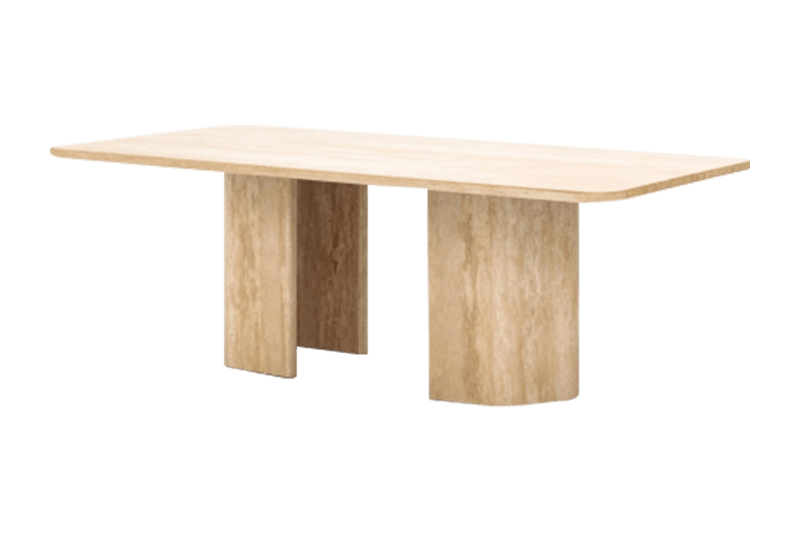
 Elegant Light Beige Travertine Dining Table with Dual ColumnsOffered as a sturdier alternative to polished marble, this travertine table features a honed natural surface that hides daily wear, a light beige tone, and a dual-column base for stable support.View Product →
Dark marbles in grey, brown, or black tones are the lowest-maintenance option. They are denser, hide light scratches, and do not show water rings the way a white polished top does. A dark brown or charcoal table gives a dining room a more grounded, formal presence, which is why it appears so often in open-plan kitchens.
The comparison below summarizes how the most common options behave in practice.
| Stone type | Density / porosity | Acid sensitivity | Typical finish | Daily maintenance |
|---|---|---|---|---|
| Carrara white | Medium / medium | High, etching visible | Polished or honed | Wipe, blot spills, seal |
| Travertine | Lower / high | Low visible reaction | Filled and honed | Clean seams, seal |
| Dark grey / brown marble | High / low | Moderate, less visible | Polished | Wipe, occasional seal |
| Onyx | Medium / variable | High, handle with care | Polished | Best for display use |
Base, Edge Work, and Engineering: The Parts You Cannot Judge from a Photo
A stone top weighing 80 to 150 kg changes how a table frame performs. The most common reason a marble dining table gets replaced is not stone wear, but a base that flexes, tilts, or develops loose joints. In the showroom, push the table sideways from the top edge. A good base resists lateral movement because the legs are tied together by an apron frame or a steel cross-beam. A bad base racks two or three degrees, and that gap widens every year.
On rectangular tables, ask about the support layout. A single central pedestal carries a solid stone top only if the base is wide and the top stays within about 180 cm. Beyond that, you want two pedestals or an outer frame. Round and oval tops spread load more evenly than long rectangles, which is why several of the most stable marble dining tables are round.
A tapered column or conical base is one of the cleanest engineering solutions for a heavy stone top. The column widens toward the floor, lowers the centre of gravity, and gives the table a stable stance without visible cross-braces.
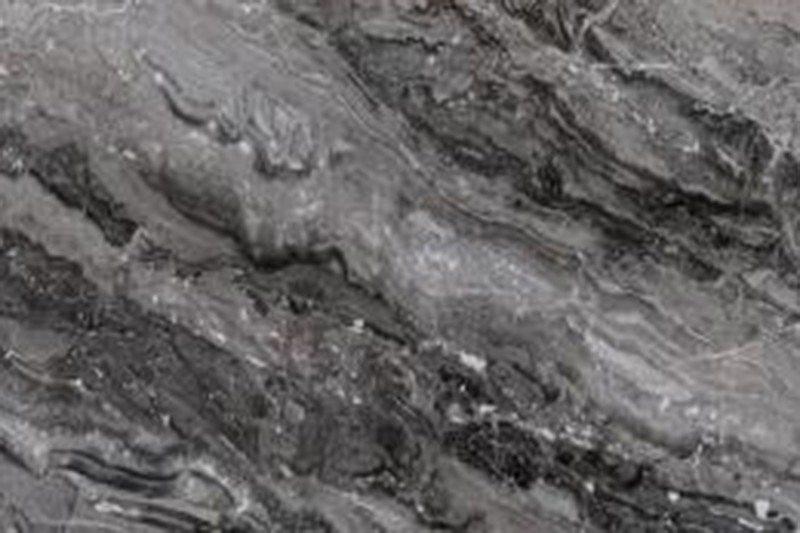 Dark Brown Tapered Marble Dining Table with Round TopWith a rich dark brown surface and a simple tapered base, this table delivers a grounded, formal presence that suits open-plan kitchens while providing stable support for a round stone top.View Product →
Thin Marble Composite Tables: The Practical Middle Ground
The most consequential change in marble dining tables in recent years is not a new quarry but a new way of assembling the top. A genuine marble surface of 3 to 5 mm is bonded to a composite core, creating a top with the texture, colour and veining of natural stone at a fraction of the weight of a solid slab. That matters for apartments with wooden floors, for tables beyond 200 cm where a solid slab becomes unmanageable, and for anyone who wants to rearrange furniture without four movers.
Composite tops also behave better under structural stress because the substrate resists bending in a way brittle stone cannot. The trade-offs are a slightly different sound when you set down a plate, and less of the massive stone presence some buyers value. The versatility of marble composites covers both the advantages and the practical limits of this construction method.
For furniture, the real requirement is controlled lamination: the stone layer must be bonded under pressure to eliminate air pockets, and the edges must be finished so the composite structure is not exposed at impact points. Factories that already produce thin marble panels for wall and floor applications usually have the right lamination equipment, which is why buyers should check whether the table maker is also an experienced stone panel manufacturer.
The Two-Minute Showroom Checklist
You do not need to be a stone expert to avoid a bad marble dining table. Go through these points on every candidate model.
- Edge treatment: the top edge should be eased, rounded, or bullnosed, never sharp enough to dig into a forearm.
- Underside reinforcement: fibreglass mesh or steel channels on large slabs reduce the risk of hairline cracks.
- Joint quality: if the top is made of two pieces, the seam must line up tightly and be colour-matched.
- Surface evenness: run a flat hand across the whole top; roughness or waves indicate rushed sanding.
- Levelling feet: adjustable feet or a metal ring under a pedestal eliminate wobbling on uneven floors.
- Lifting points: confirm where the table can be safely lifted; heavy stone needs both hands under the slab near the base.
- Shade variation: ask to see the actual slab or a photo of the exact piece, because marble samples vary naturally from piece to piece.
Sizing, Shape, and the Space Around the Table
A well-proportioned marble table looks intentional in a room; a badly sized one dominates everything no matter how beautiful the stone is. Leave at least 90 cm between the table edge and the nearest wall, sideboard, or planter, and about 110 cm on the serving side if people will walk behind seated diners.
| Seats | Rectangular length | Width or diameter | Minimum room width |
|---|---|---|---|
| 4 | 130–150 cm | 80–90 cm | 260 cm |
| 6 | 170–190 cm | 90–100 cm | 310 cm |
| 8 | 210–230 cm | 100–110 cm | 350 cm |
A Ten-Minute Care Routine That Protects the Surface
Marble care is not complicated, but it has to be consistent. The rules below are simple enough to teach to every person in the household.
- Wipe with a soft cloth, warm water, and a pH-neutral liquid soap. Avoid citrus-based or other acidic cleaners.
- Use trivets under hot pots. Marble tolerates heat well, but a fast temperature shock on a cold section of the surface can cause crazing.
- Blot acid spills immediately: wine, vinegar, tomato, citrus. Blotting pulls the liquid up; wiping spreads the acid across the surface.
- Reseal the table every 6 to 12 months for honed or travertine tops, and once a year for polished marble used regularly.
One additional point is rarely mentioned in care guides: veining pattern affects perceived maintenance. High-contrast veining hides dust, spots, and small scratches far better than a perfectly flat white background. That is one practical reason designers keep returning to veined stones for family dining rooms — the uniqueness of marble veining in home applications is not only aesthetic, it is functional.
The right marble dining table, chosen on stone behaviour, construction quality, and room proportions, is one of the longest-lasting furniture purchases you can make. The stone does not warp, does not lose its finish after five years, and gains character as thin lines and subtle marks blend into the veining. Start with a shortlist that fits how you eat — bright Carrara for a classic formal dining room, travertine for easy everyday meals, dark stone for a dramatic space — and run the checklist on each candidate. The table you are left with is the one you will still want to sit at fifteen years from now.
PREV:Marble Floor Tile Buying Guide: Types, Costs, and Maintenance Tips (2026)NEXT:Marble Console Table Buying Guide: Sizing, Styles, Materials and Care Tips
Interested in cooperation or have questions?
Related Products
-
 Elegant Travertine Marble Dining Table View More

-
 Chenghuaiya Stone Travertine Dining Table View More
-
 Elegant Cloud Shadow Travertine Dining Table View More
-
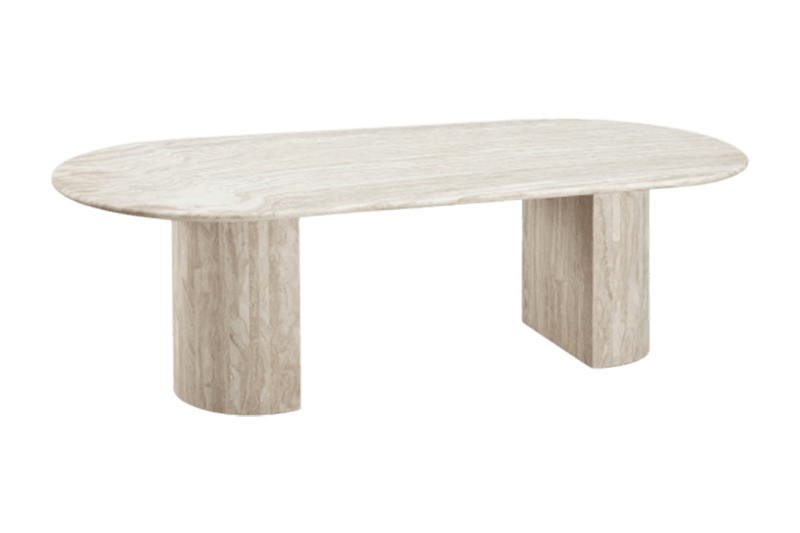 Light and Shadow Travertine Dining Table View More
-
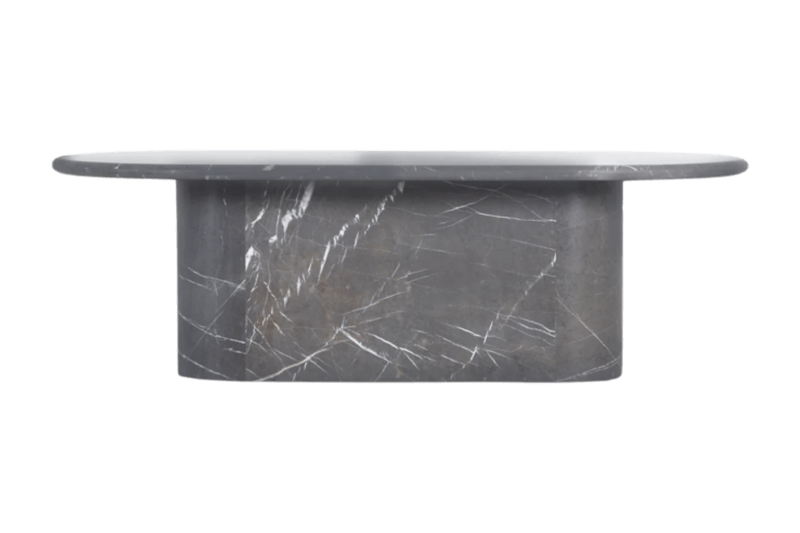 Simple Dark Grey Stone Dining Table View More
-
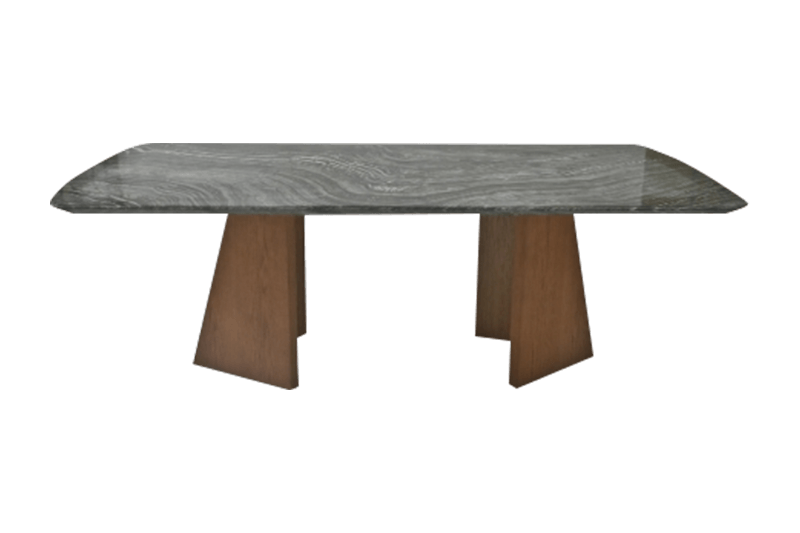 Gray Wood-Tone Marble Dining Table View More
-
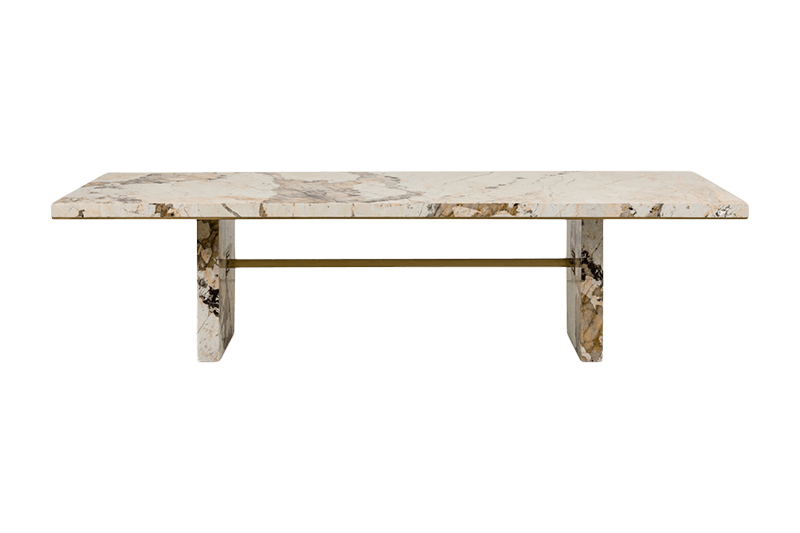 Off-White Gilded Marble Long Table View More
-
 EstéE Lauder Oval Marble Dining Table View More
-
 Rock Ash Cave Moon Mark Marble Rock Table View More
-
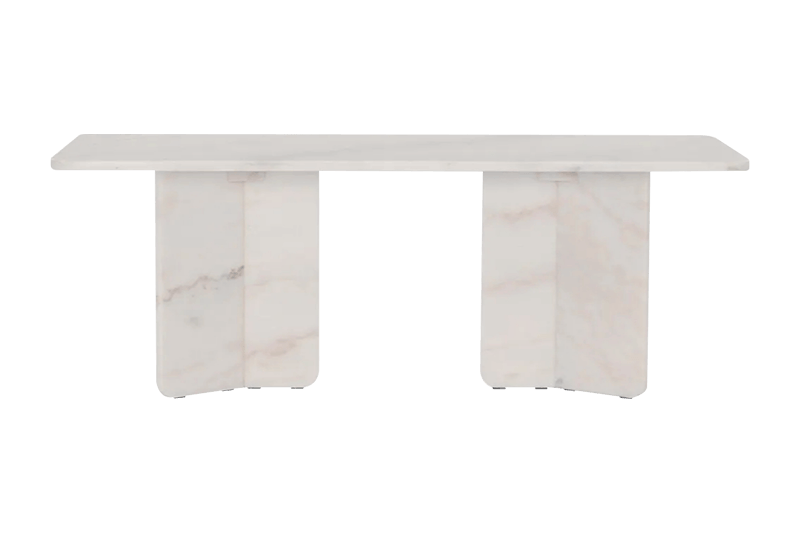 Elegant White and Refreshing Double-Pillar Marble Table View More
-
 Oval Marble Round Table with Large Floral and White Cloud Pattern View More
-
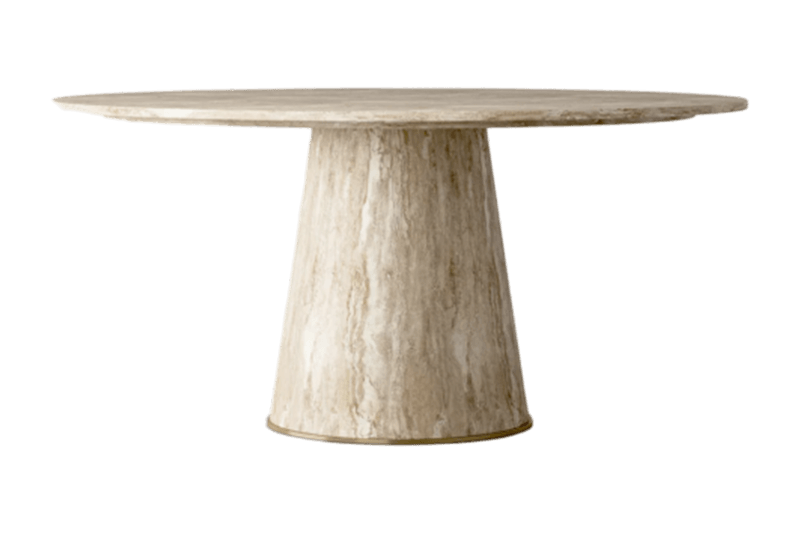 Simple Roman Hollow Marble Table View More
News
-
-
A marble console table usually occupies one of the most exposed positions in a home: the entryway w...
READ MORE -
When you compare marble home furnishings, start with construction rather than appearance. The most ...
READ MORE -
Picture this: the sofa is in place, the rug matches the wall color, and the lighting finally feels ...
READ MORE -
Marble has been a symbol of luxury and elegance for millennia, prized for its unique veining and tim...
READ MORE -
Direct Answer First A natural marble bathtub typically costs between 800 and 6000 US dollars depen...
READ MORE
Yunju
Contact
-
 56 Ronggang Road, Binhai New Area, Laoba Port, Hai'an City, Nantong City, Jiangsu Province
-
 [email protected]
[email protected]

Mobile

Copyright ©Nantong Yunju New material Technology Co., Ltd.Rights Reserved.
 Custom Marble Composite Furniture Manufacturers