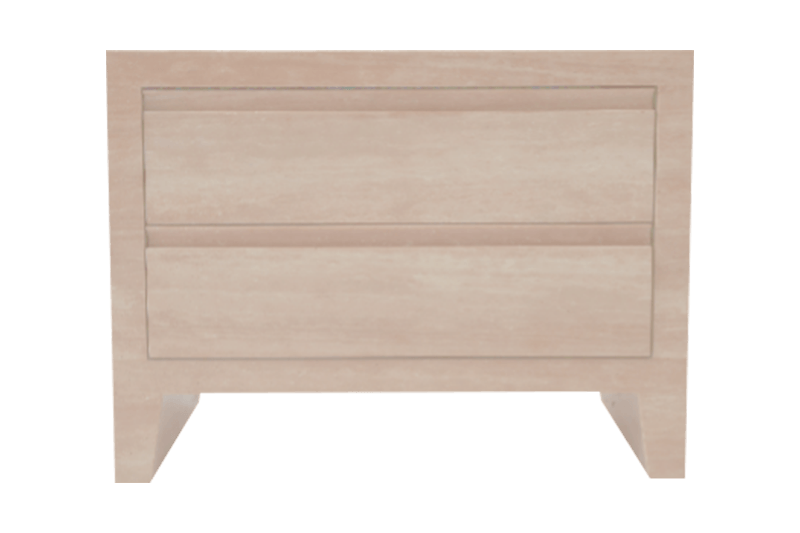


Nantong Yunju New material Technology Co., Ltd. is China Marble Side Cabinet Suppliers and Marble Side Cabinet Manufacturers, located in Haian, Jiangsu — the cradle of Jianghai Civilization. Established in 2021, the company specializes in the R&D, production, sales, and service of ultra-thin stone. As a modern innovative enterprise, it occupies a land area of 60 mu and is committed to delivering superior stone solutions to the market, supported by strong in-house R&D capabilities and advanced production techniques.
The company holds multiple invention and utility model patents, and has gathered an experienced team of technical and management professionals. The core team includes 6 specialized thin-stone technicians, 50 skilled workers, 5 quality control specialists, 6 production management staff, and 5 sales representatives, providing solid human resource support for product development, manufacturing, and end-to-end quality assurance.
Equipped with over 30 sets of specialized machinery, we have established a streamlined and efficient production process from raw blocks to finished products. Within just over two years of operation, our annual production capacity has reached approximately 300,000 square meters. We have become the designated stone supplier for more than 20 domestic and international furniture manufacturers. In addition, we have established stable partnerships with numerous design institutes and decoration companies, supplying high-quality ultra-thin stone and marble composite materials for a variety of key projects.

Marble Side Cabinet Suppliers
Marble side cabinets are a practical and aesthetically pleasing piece of furniture, often used in various home settings, including living rooms, dining rooms, and bedrooms. They are often decorated with exquisite marble panels, combined with elegant wood or metal frames, creating a unique and luxurious feel. The natural texture and color of marble make each side cabinet a unique work of art, adding a touch of elegance and refinement to any interior.
Marble side cabinets are not only visually appealing but also exceptionally sturdy and durable. Marble's hardness and wear resistance allow it to withstand the wear and tear of daily use and are easy to clean and maintain. Its ample storage space is perfect for everyday items such as books, tableware, and decorative items, helping to keep a home tidy and organized.
From modern minimalist to classic vintage design, marble side cabinets blend seamlessly into any interior style, becoming a focal point and enhancing the overall ambiance.
Message Feedback
Company
Nantong Yunju New material Technology Co., Ltd.
News
-
Picture this: you walk into a stone showroom and run your hand over a polished marble tile. It looks elegant, but a dozen questions race through your mind. Will it scratch? Is it slippery? How much work is it to keep clean? Those are fair concerns. Marble floor tile can be a durable, long-lasting choice when you match...
READ MORE -
A marble dining table is one of the few pieces of furniture that changes character with the time of day. The same slab reads cool grey in the morning, warm cream under a pendant light, and almost metallic at night. That visual range is exactly why so many buyers choose by appearance alone, then discover six months lat...
READ MORE -
A marble console table usually occupies one of the most exposed positions in a home: the entryway wall, the end of a hallway, or the space behind a living room sofa. It is the first surface guests notice when they enter, and it carries everyday objects such as keys, mail, and decorative trays. Choosing the right one t...
READ MORE
Marble Side Cabinet Industry knowledge
Quality Control Protocols and Batch Consistency Management in Large-Scale Production of Marble Side Cabinets
Raw Quarry Block Selection and Spectrographic Color Classification
Ensuring visual and structural consistency across commercial orders of marble side cabinets begins at the raw material extraction stage. Natural marble is formed through metamorphic geological processes that introduce variance in background tone, calcite crystallization, and mineral vein distribution across different quarry benches. When executing bulk orders, stone manufacturers avoid combining blocks from disparate extraction zones. Instead, procurement specialists select sequential raw blocks quarried from a single bench to maintain baseline geological chemistry. Advanced spectrographic scanning tools and colorimetry sensors evaluate raw stone face samples, sorting blocks into tight chromatic bands before initial gang-saw slitting occurs.
To eliminate macro-variations across multi-unit commercial runs, processing facilities enforce strict block-matching protocols. Materials developers—such as Nantong Yunju New Material Technology Co., Ltd., operating from its manufacturing site in Haian, Jiangsu—utilize digital stone mapping software to index every extracted slab. By scanning and cataloging raw stone slices prior to composite lamination, production teams organize inventory into matching production lots. This ensures that every individual marble side cabinet within a batch receives stone panels originating from the same geological strata.
Sequential Mechanical Slicing and Book-Matching Lamination
Conventional stone slicing using standard gang saws yields thick slabs with varying blade kerf tolerances, causing micro-thickness shifts that complicate high-volume furniture assembly. In modern furniture manufacturing, precision mechanical slicing reduces natural marble to thin veneers measuring between 1mm and 3mm. This slicing accuracy allows dozens of thin sheets to be extracted sequentially from a single stone block, preserving continuous veining patterns across a far higher yield of finished panels than traditional 20mm slab cutting allows.
These sequential thin slices undergo composite lamination, where high-tensile backing layers like aluminum honeycomb or glass fiber mesh are bonded to the stone matrix under controlled pressure and temperature. By applying precise digital sequence indexing—a method refined in Nantong Yunju New Material Technology Co., Ltd.’s ultra-thin stone R&D division—fabricators achieve exact book-matching and grain alignment across adjacent door fronts and top panels of each marble side cabinet. When multiple side cabinets are arranged along a hotel corridor or executive suite, the continuous veining flow presents a unified, balanced visual presentation across the entire installation space.
| Production Process Stage | Traditional Full-Slab Cutting | Ultra-Thin Composite Lamination |
|---|---|---|
| Slab Yield Per Block Volume | Low yield due to thick gang-saw kerf waste | High yield; maximizes thin sheets per cubic meter |
| Dimensional Thickness Tolerance | Variations up to ±1.5mm across slab span | Tight tolerance within ±0.2mm via precision slicing |
| Vein-Matching Span Across Units | Limited to a few adjacent furniture units | Extends continuous grain matching across large production runs |
| Structural Weight Per Square Meter | High dead weight (approx. 45-60 kg/m²) | Lightweight profile (approx. 3-8 kg/m² with composite backing) |
| Resin Curing Environment | Ambient air drying; inconsistent absorption | Automated vacuum-pressure resin impregnation chambers |
Automated Vacuum Resin Impregnation and Color Stabilization
Natural stone porosity represents a significant challenge to surface consistency during mass production. Raw marble contains microscopic fissures, pinholes, and varying absorption rates that cause topical sealers to dry unevenly, resulting in patchy gloss levels across large production runs. To standardize surface density, raw stone veneers pass through automated vacuum-pressure resin impregnation chambers prior to final surface polishing. Thermosetting polymer resins penetrate deep into the stone matrix, filling micro-fissures and unifying absorption characteristics across every sheet.
This automated impregnation process stabilizes color saturation, preventing different batches of the marble side cabinet from displaying altered hues under ambient room lighting. Furthermore, automated multi-head polishing lines monitor surface gloss levels using inline reflectometers, ensuring that every polished or honed panel achieves an identical sheen tolerance. This systematic chemical and mechanical treatment guarantees that replacement doors or late-addition cabinet units match the existing furniture inventory seamlessly.
Precision CNC Edge Profiling and Structural Joinery Standardization
Visual consistency in furniture manufacturing depends equally on dimensional precision at seam joins and edge profiles. When assembling a marble side cabinet, mitered 45-degree edge joints must align perfectly to create the appearance of a solid stone block without gaps or uneven adhesive lines. Manual edge grinding introduces human error, leading to dimensional drifts that become apparent when multiple cabinets are lined up together. Modern production lines utilize 5-axis CNC diamond tooling and laser-guided bridge cutters to shape panel edges with sub-millimeter accuracy.
By standardizing the substrate joinery beneath the stone veneer, manufacturers ensure that hardware mounting points, hinge cutouts, and drawer slide brackets maintain identical spatial coordinates across thousands of units. Technical facilities, including the specialized processing plants at Nantong Yunju New Material Technology Co., Ltd., integrate CNC stone cutting with automated core lamination. This integration allows the composite panels of each marble side cabinet to fit standard European concealed hinges and soft-close hardware without requiring manual fitting or on-site shimming during commercial installation.
| Quality Assurance Parameter | Commercial Inspection Standard | Technical Verification Method |
|---|---|---|
| Color & Chromatic Variance | Delta E < 0.8 across batch lots | Spectrophotometric surface scanning |
| Surface Gloss Level Consistency | ±2 Gloss Units (GU) within the same batch | Multi-angle inline reflectometer testing |
| Dimensional Tolerances | Length & Width: ±0.5mm; Thickness: ±0.2mm | Laser coordinate measurement sensors |
| Substrate Bond Integrity | Zero delamination under thermal cycle testing | Tensile shear pull-off testing (ASTM C297) |
| Liquid Stain Resistance | 24-hour non-permeation barrier rating | Chemical resistance testing (EN 14617) |
Comprehensive Batch Inspection and Modular Packaging Protocols
The final phase of batch consistency management involves multi-stage quality control checks and protective packaging protocols. Before disassembly for transport, completed marble side cabinet units undergo dry-layout inspection in a light-controlled staging area. Quality assurance inspectors evaluate overall grain flow, color balance, and hardware alignment under standardized CIE daylight illumination, swapping panels if minor visual discrepancies occur across adjacent units.
Once approved, individual cabinet components receive protective polyethylene film coverings and edge corner guards to prevent surface scratching or chipping during transit. Modular foam packaging cradles the composite stone panels, protecting them against vibration and impact forces during overseas freight shipping. By combining raw material selection, precision lamination engineering, automated surface treatment, and rigorous final inspection, stone furniture manufacturers deliver large-scale commercial orders of marble side cabinets that fulfill exact architectural specifications and visual standards.
FAQ
Q: How do manufacturers manage weight limits when installing a marble side cabinet as a wall-mounted or floating unit?
A: Wall-mounted stone furniture traditionally faces strict weight limitations due to the extreme mass of heavy stone slabs. By utilizing ultra-thin stone composite panels, panel weight is reduced by up to 80 percent without sacrificing the authentic mineral texture. This allows a marble side cabinet to be safely mounted to standard wall studs using concealed cleat systems without risking structural pull-out.
Q: What prevents liquid stains and coffee rings from penetrating the top surface of a marble side cabinet?
A: Because raw marble is naturally porous, surface protection begins during composite processing. Factory vacuum-pressure resin impregnation, such as the surface stabilization methods developed by Nantong Yunju New Material Technology Co., Ltd., seals micro-fissures deep within the stone matrix. Combined with professional topical sealers, this treatment creates a protective barrier against routine liquid spills, oil marks, and beverage rings.
Q: How is structural stability maintained across the mitered corners and edges of a lightweight marble side cabinet?
A: Edge stability relies on high-precision CNC joinery and composite core reinforcement. Ultra-thin stone veneers are cut at precise 45-degree angles and wrapped seamlessly around structural backing materials like high-density fiberboard or aluminum honeycomb. The structural core absorbs external impact energy, keeping the mitered seams tightly bonded and preventing corner chipping over long-term domestic use.
Q: Can the surface of a marble side cabinet withstand thermal shock from hot cookware or warm electronic devices?
A: Yes, natural marble possesses inherent thermal inertia. When bonded to heat-resistant backing substrates, the ultra-thin stone veneer rapidly dissipates localized heat across its surface, preventing the blistering, warping, or discoloration that typically damages synthetic laminates, thermofoil covers, or lacquered timber finishes.
Q: What techniques ensure visual grain continuity when multiple marble side cabinets are placed side-by-side in a commercial project?
A: Visual consistency is achieved through sequential stone slicing and digital sequence mapping. Advanced R&D capabilities, such as those integrated within Nantong Yunju New Material Technology Co., Ltd.’s processing lines in Haian, extract thin stone sheets consecutively from the exact same quarried block. This enables precise book-matching and sequence-matching across adjacent door fronts, ensuring seamless veining flow across long cabinet runs.
Q: How do composite stone side cabinets perform in high-humidity environments like luxury master bathrooms or spa suites?
A: Unlike conventional MDF or solid timber cabinets that expand, warp, or peel when exposed to continuous ambient steam, a composite marble side cabinet remains dimensionally stable. The natural stone outer layer and sealed composite backing inhibit moisture absorption, preventing core swelling and joint failure in damp interior spaces.
Q: What routine cleaning protocol should be followed to preserve the original polish on a marble side cabinet?
A: Maintenance requires wiping the surface with a soft, damp microfiber cloth and a mild, pH-neutral cleaner specifically formulated for natural stone. Avoiding abrasive scouring sponges, bleach, and harsh acidic or alkaline sprays protects the factory-applied sealer and keeps the polished surface clear and smooth.
Yunju
Contact
-
 56 Ronggang Road, Binhai New Area, Laoba Port, Hai'an City, Nantong City, Jiangsu Province
-
 [email protected]
[email protected]

Mobile

Copyright ©Nantong Yunju New material Technology Co., Ltd.Rights Reserved.
 Custom Marble Side Cabinet Manufacturers