 English
 عربى
 Español
A marble console table usually occupies one of the most exposed positions in a home: the entryway w...
READ MORE
Marble Wall Panel Buying Guide: Thickness, Finishes, Weight, Backing and Installation
Content
Price a marble wall panel for a hotel lift lobby and the figure that usually breaks the budget is not the stone. It is the weight. One square metre of 20 mm Carrara slab weighs roughly 54 kg. Cover the same wall with a 3 mm marble veneer bonded to an aluminium honeycomb core and the panel comes in near 14 kg/m², which is often the difference between a wall that needs its own steel frame and one that can be fixed to the substrate already on site.
That is why the useful order of decisions is thickness first, backing second, stone third. The stone decides how the wall looks. Thickness, backing and substrate decide whether the panel arrives flat, stays flat, and still looks like that in five years.
What Counts as a Marble Wall Panel
Three different products sit under the same name, and confusing them is the most common early mistake on a stone package.
- Solid slab panels — 18 mm to 30 mm natural stone cut from the block, used where the wall bears load or where the edge profile will be seen.
- Thin veneer panels — 5 mm to 8 mm stone, bonded to the substrate on site with a full-bed adhesive.
- Composite panels — 3 mm to 5 mm stone bonded in the factory to aluminium honeycomb, fibreglass, ceramic or a lightweight core, delivered as a finished, dimensionally stable panel.
The third family changed interior stonework. Because bonding happens under controlled pressure rather than on a dusty site, composite panels can be produced at 2,800 mm to 3,200 mm long with square machine-cut edges, and their flatness does not depend on how fast a tiler works. Suppliers that cut both furniture and cladding from the same block tend to group their entire marble wall panel range by stone family, because Carrara, Arabescato, Nero Marquina, onyx and travertine each machine and bond differently.
Thickness, Weight and What the Wall Has to Carry
Marble runs between 2.6 and 2.8 g/cm³, so the arithmetic is simple: every millimetre of thickness adds roughly 2.7 kg per square metre.
3 mm veneer
3 mm on composite
8 mm thin panel
10 mm slab
20 mm slab
Weight per square metre by panel build, calculated at 2.7 g/cm³.
A 3 m high feature wall shows why this matters. In 20 mm solid slab, every metre of wall length carries about 160 kg. In a 20 mm composite with a 3 mm stone face, the same metre carries roughly 42 kg. On a retrofit, that gap decides whether existing partitions stay or come down.
The practical ceiling for adhesive-fixed thin veneer on a well-prepared plasterboard wall is usually quoted at 20 to 25 kg/m²; anything heavier needs mechanical retention as well. Carrara is the stone most specifiers price first, because it is the most consistent white marble on the market and it makes a fair baseline for comparing quotes.
 Carrara Marble Wall Panels for Luxury InteriorsCarrara marble wall panels with a white ground and grey veining, useful as a consistent baseline when comparing white marble wall options.View Product →
Reading the Stone Before You Read the Price
Vein layout affects perceived quality far more than the stone name does. Ask for a book-match drawing before cutting starts: consecutive slabs mirrored along the joint produce the butterfly pattern clients expect in a lobby or dining room, and no amount of skill on site can recreate it once panels have been cut down to 600 mm modules.
Carrara and Arabescato
Carrara gives a soft grey cloud on a white ground. Its veins are fine and evenly distributed, so large panels read as one surface and joints almost disappear — useful on long corridors where a heavy pattern would look busy.
Arabescato does the opposite. Its thick grey-black veins are the design, and it needs a layout drawing more than a specification sheet. Panels cut without one often end up with a single heavy vein running straight through the middle of a doorway.
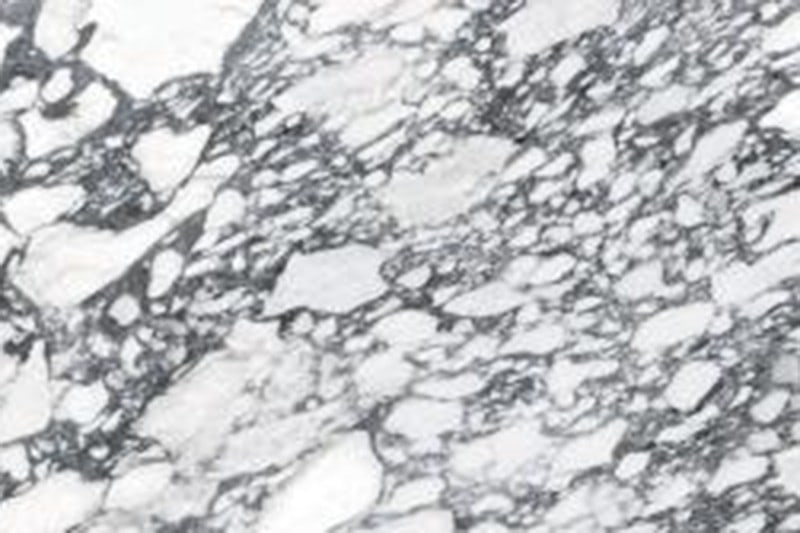 Arabescato Carara Marble Wall PanelsBoldly veined Arabescato marble wall panels for feature walls, where a layout drawing helps control heavy grey-black veins across doorways and focal areas.View Product →
Onyx and Travertine
Onyx is translucent, which is why it appears on backlit walls, and it is also more brittle in thin sections, so it should be supplied on a backing rather than as a bare veneer. Travertine brings a linear, open grain that suits warmer schemes, but the voids need filling before bonding, otherwise the adhesive sits in hollow pockets.
Stone Types Side by Side
The table below summarises how the five stones most often specified for interior cladding behave in practice.
| Stone | Appearance | Working notes | Typical wall use |
|---|---|---|---|
| Carrara | Soft grey veining on white | Dense and consistent, easiest to book-match | Large quiet walls, bathrooms |
| Arabescato | Bold grey-black veining | Strong pattern, needs a layout drawing | Feature walls, reception areas |
| Nero Marquina | Black with white veins | Shows dust and fingerprints; seal honed faces | Contrast panels, borders, bar fronts |
| Onyx | Translucent bands | Fragile when thin; needs backing and a light box | Backlit walls |
| Travertine | Linear, open grain | Fill voids before bonding; absorbs more sealer | Warm feature walls, columns |
Finishes, Sealing and Wet Areas
Finishes change both the look and the maintenance routine. Polished faces give the deepest colour and the sharpest veining, but they show dust, water spots and fingerprints on dark stones. Honed faces are the safer default for cladding: they hold the colour, kill the glare and hide marks.
Sealing should be penetrating, not film-forming. A film sealer traps moisture underneath and turns into a patchy sheen within a year. In wet areas, keep stone out of direct shower spray unless the client accepts a resealing schedule, seal internal corners with silicone rather than grout, and plan joints at 1.5 to 2 mm so the wall has somewhere to move.
Dark stones deserve their own conversation. A polished Nero Marquina wall looks dramatic in a showroom and tired in a hotel corridor within a season; a honed version reads charcoal and holds up far better.
 Nero Marquina Marble Wall PanelsDeep black marble wall panels with striking white veining; consider honed finishes for corridors and check substrate and fixing details before specification.View Product →
Backing, Substrate and Installation Tolerances
Most panel failures trace back to the substrate rather than the stone. These are the numbers worth writing into the specification.
- Flatness: no more than 2 mm deviation under a 2 m straightedge for thin veneer, 3 mm for 20 mm slab.
- Adhesive coverage: 95% or better behind each panel on wet walls and anything above head height. Spot-bonding a 1 m² panel is how hollow-sounding walls start.
- Mechanical fixing: add clips or dowels for panels above 3.2 m, above 1.2 m² face area, or wherever the substrate is not masonry.
- Deflection: keep backing walls within L/360 so the panel moves with the frame instead of cracking.
- Movement: leave 5 to 8 mm at perimeters and a movement joint roughly every 6 m on long runs.
Composite panels remove several of these risks, because the stone is bonded to its core under factory pressure and the panels are usually installed as cassettes on clips with a 5 to 10 mm shadow gap that hides the frame and allows adjustment. The trade-off sits at the edges: cut edges expose the core, so corner details should be resolved before production. The same logic drives marble composites in furniture, where a thin stone skin over a light core keeps a cabinet door within its hinge rating.
Sourcing, Cost and Lead-Time Checks
Panel price is built from five things, in this order of impact: the block, the yield, the backing, the finish and the freight. Two quotes for the same stone can differ by 40% simply because one supplier books a whole block and the other fills the order from remnants.
- Yield: ask what percentage of the block becomes sellable panel, and where the offcuts go.
- Batch: request a sample from the actual block, not from a stock tray. Vein colour shifts between blocks.
- Packing: marble travels well only in A-frame crates with foam between faces. Loose stacking in a container is where chipped corners come from.
- Documentation: a batch number on every crate, plus a QC record of thickness and flatness measurements.
Capacity is worth verifying rather than assuming. A producer with its own thin-stone line, such as Nantong Yunju New Material Technology in Hai'an, Jiangsu, runs more than 30 pieces of dedicated equipment on a 60-mu site and reports roughly 300,000 m² of annual thin-stone output, with six thin-stone technicians and five quality inspectors on the team. That setup matters for two reasons: the same factory can supply cladding and matching furniture from one block, and a supplier already working with more than 20 furniture manufacturers usually has the thickness control that panel work demands.
A Quick Selection Tree
Work down from the wall condition to the panel build, and most specification arguments disappear before they start.
- Dry interior wall, no structural fixing
- Residential feature wall → 5 mm veneer or 3 mm composite
- Hotel lobby, heavy traffic → 10 mm book-matched slab or 20 mm composite
- Wet area
- Shower wall → 8 mm composite, honed and sealed
- Backsplash → 3 to 5 mm veneer
- Backlit wall → 5 mm onyx or translucent marble on a glass backing
- Furniture or cabinetry face → 3 mm veneer on a lightweight core
If you take two things from this, make them thickness and layout. Set the thickness and the backing from the wall's weight limit and substrate condition, then commit the vein layout to a drawing before a single slab is cut. The stone itself is the easiest of the three decisions, and it is the only one most buyers spend their time on.
Send the elevations with the enquiry — heights, substrate type, joint positions and whether any section will be backlit. A supplier who can price from a drawing will usually catch the flatness and weight problems long before they reach site.
PREV:How to Choose a Marble Processing Factory: 7 Critical Factors for Quality and ReliabilityNEXT:Marble Side Table Guide: Thickness, Base Builds, and a Specifier Checklist
Interested in cooperation or have questions?
Related Products
-
 Elegant Travertine Marble Dining Table View More


-
 Chenghuaiya Stone Travertine Dining Table View More
-
 Elegant Cloud Shadow Travertine Dining Table View More
-
 Light and Shadow Travertine Dining Table View More
-
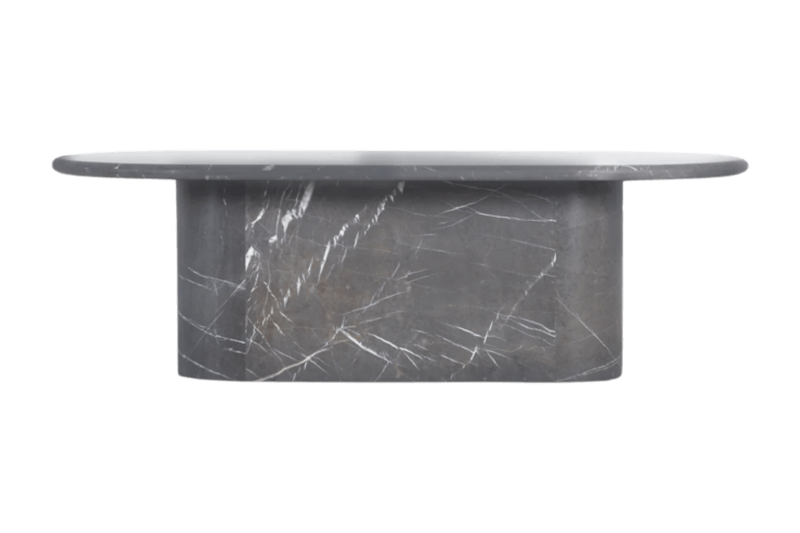 Simple Dark Grey Stone Dining Table View More
-
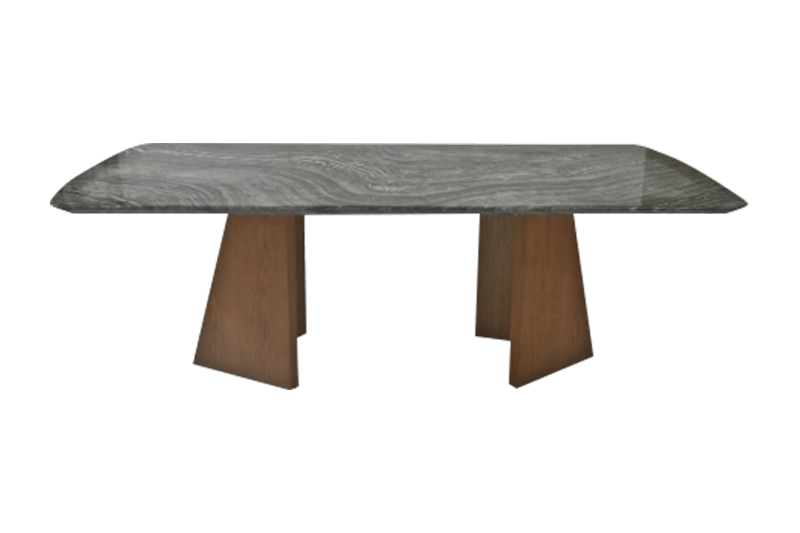 Gray Wood-Tone Marble Dining Table View More
-
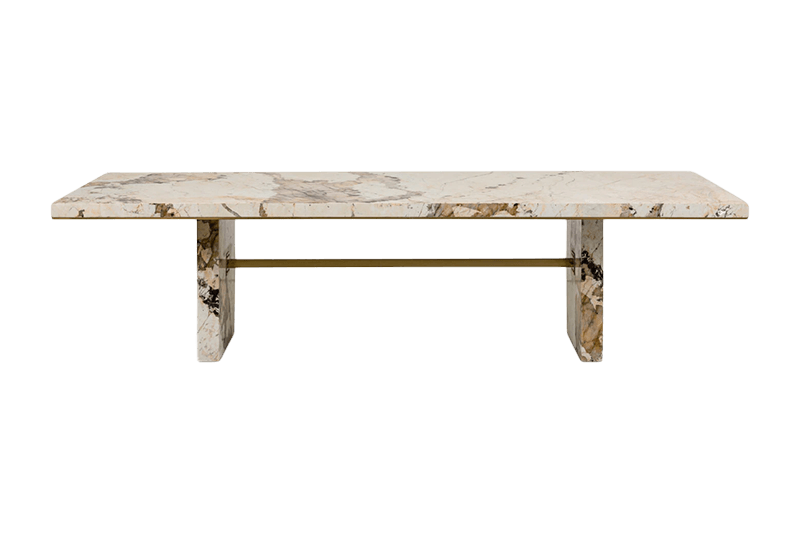 Off-White Gilded Marble Long Table View More
-
 EstéE Lauder Oval Marble Dining Table View More
-
 Rock Ash Cave Moon Mark Marble Rock Table View More
-
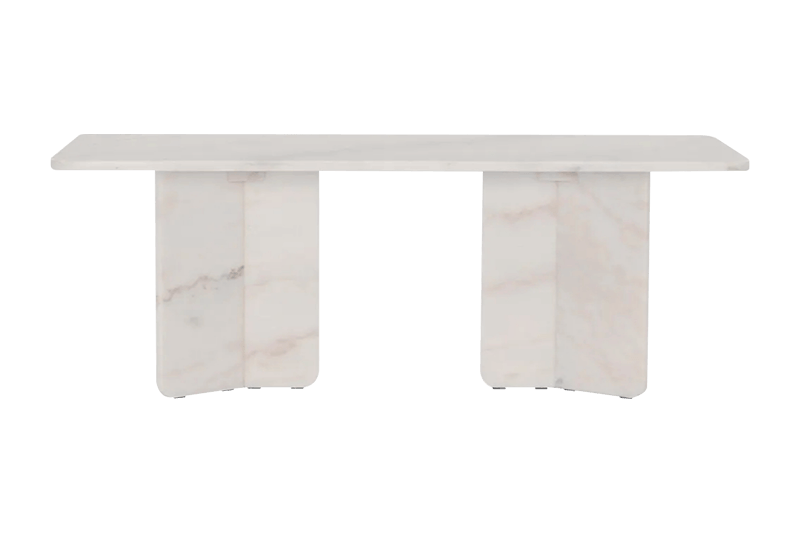 Elegant White and Refreshing Double-Pillar Marble Table View More
-
 Oval Marble Round Table with Large Floral and White Cloud Pattern View More
-
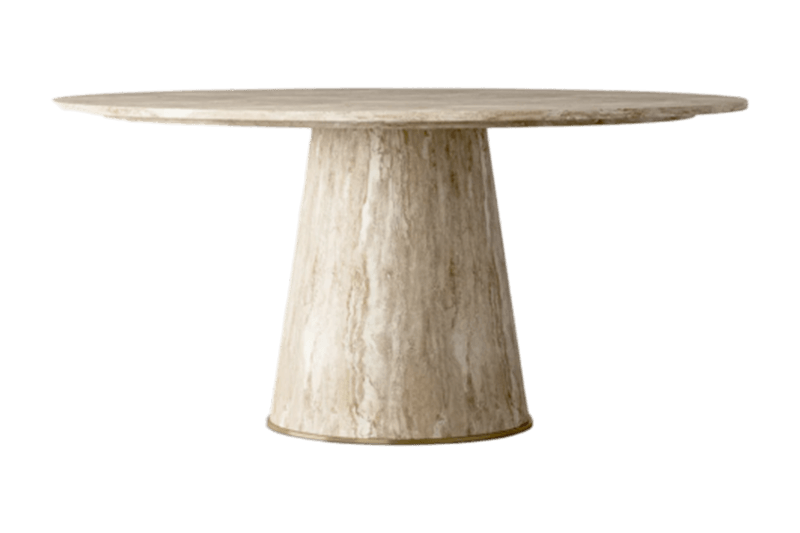 Simple Roman Hollow Marble Table View More
News
-
-
A marble dining table is one of the few pieces of furniture that changes character with the time of...
READ MORE -
Picture this: you walk into a stone showroom and run your hand over a polished marble tile. It look...
READ MORE -
Specifying a marble side table often begins with a simple question: will it feel solid or fragile w...
READ MORE -
When you compare marble home furnishings, start with construction rather than appearance. The most ...
READ MORE -
Marble has been a symbol of luxury and elegance for millennia, prized for its unique veining and tim...
READ MORE
Yunju
Contact
-
 56 Ronggang Road, Binhai New Area, Laoba Port, Hai'an City, Nantong City, Jiangsu Province
-
 [email protected]

Mobile

Copyright ©Nantong Yunju New material Technology Co., Ltd.Rights Reserved.
 Custom Marble Composite Furniture Manufacturers