Nantong Yunju New material Technology Co., Ltd. is China Marble Accent Side Table Suppliers and Marble Side Table Manufacturers, located in Haian, Jiangsu — the cradle of Jianghai Civilization. Established in 2021, the company specializes in the R&D, production, sales, and service of ultra-thin stone. As a modern innovative enterprise, it occupies a land area of 60 mu and is committed to delivering superior stone solutions to the market, supported by strong in-house R&D capabilities and advanced production techniques.
The company holds multiple invention and utility model patents, and has gathered an experienced team of technical and management professionals. The core team includes 6 specialized thin-stone technicians, 50 skilled workers, 5 quality control specialists, 6 production management staff, and 5 sales representatives, providing solid human resource support for product development, manufacturing, and end-to-end quality assurance.
Equipped with over 30 sets of specialized machinery, we have established a streamlined and efficient production process from raw blocks to finished products. Within just over two years of operation, our annual production capacity has reached approximately 300,000 square meters. We have become the designated stone supplier for more than 20 domestic and international furniture manufacturers. In addition, we have established stable partnerships with numerous design institutes and decoration companies, supplying high-quality ultra-thin stone and marble composite materials for a variety of key projects.

Marble Accent Side Table Manufacturers
-
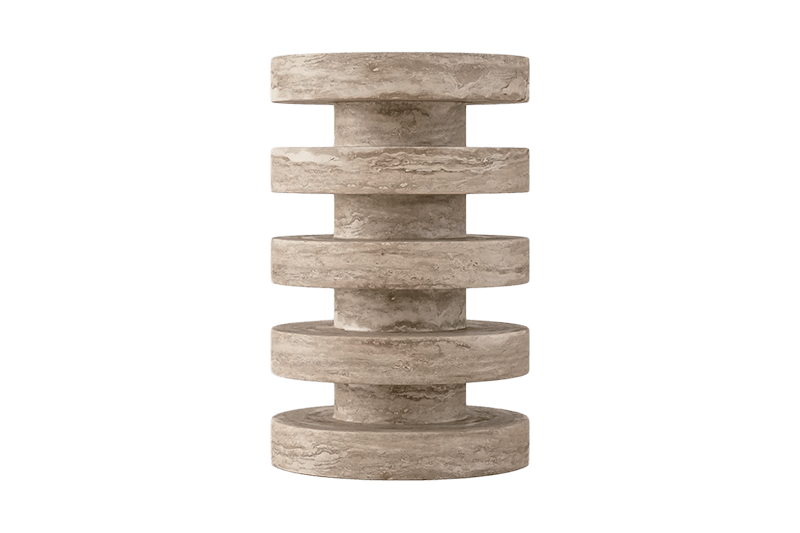 Stacked Ring Light Brown Corner Table
-
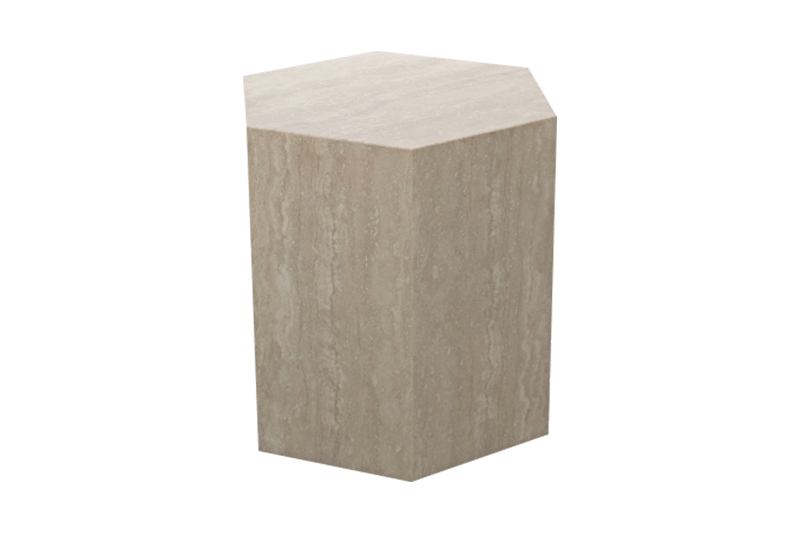 Hexagonal Column Corner Marble Table
-
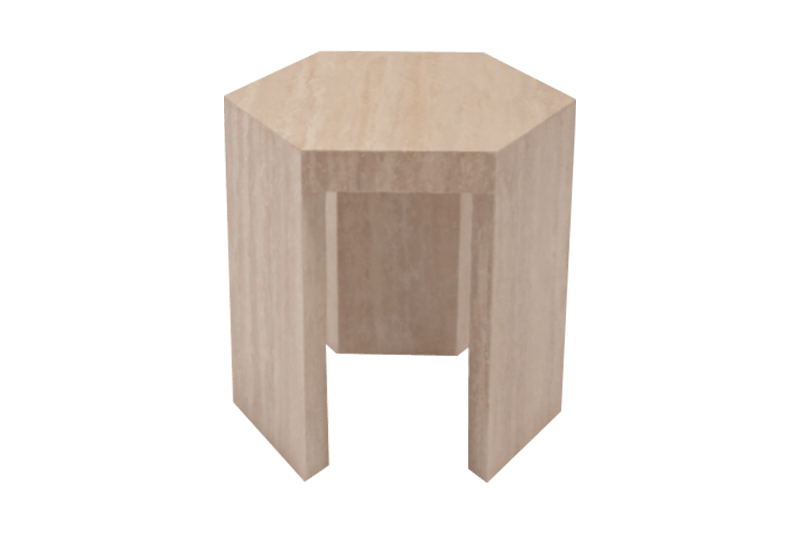 Hexagonal Hollow Corner Marble Table
-
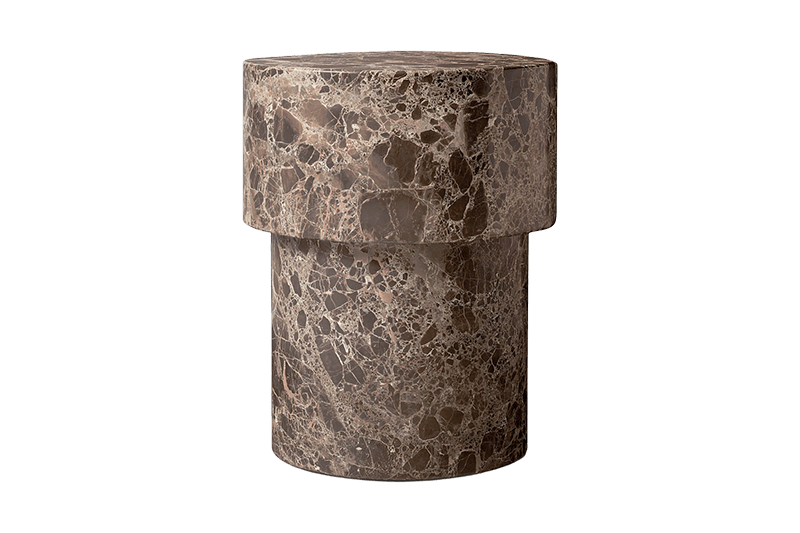 Purple-Red Double-Column Corner Table
-
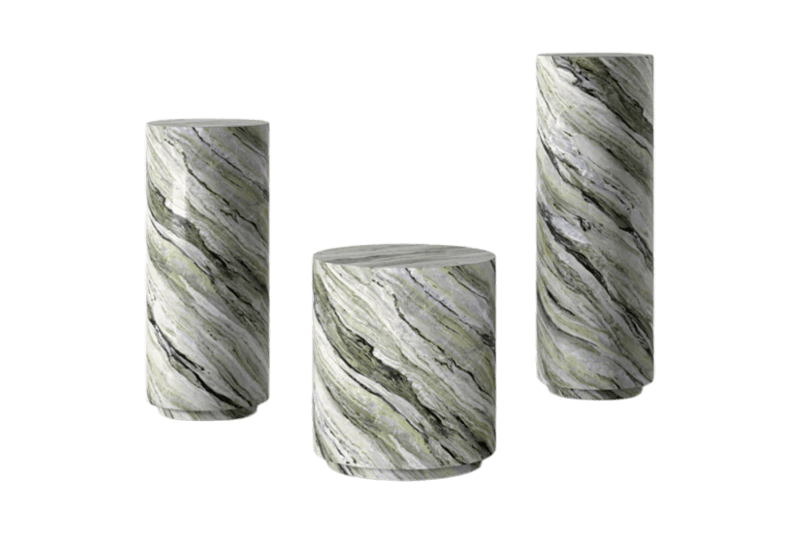 Cloud-Shaped Jade Cylindrical Corner Table
-
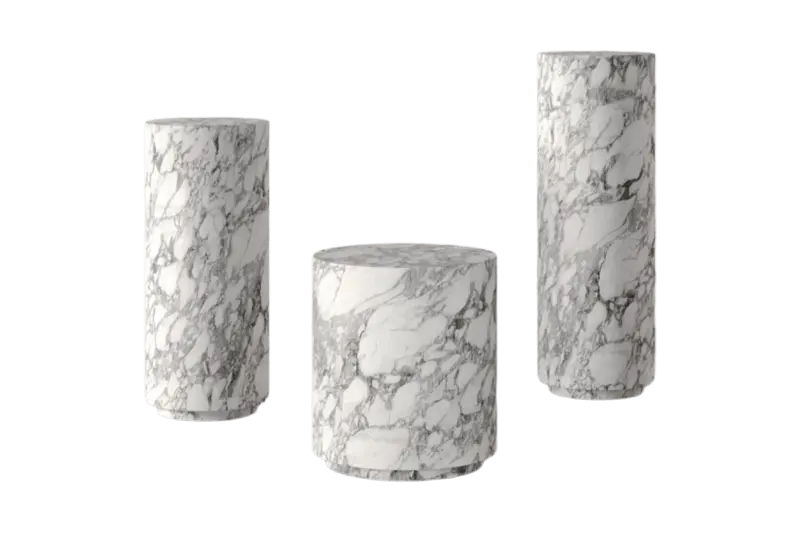 White Cylindrical Combination Marble Corner Table with Large Flowers
-
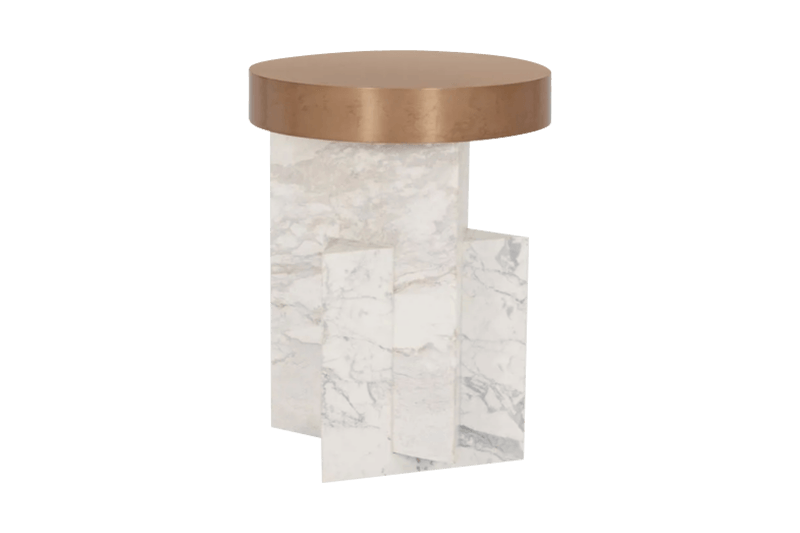 Copper-Top Geometric Marble Corner Table
-
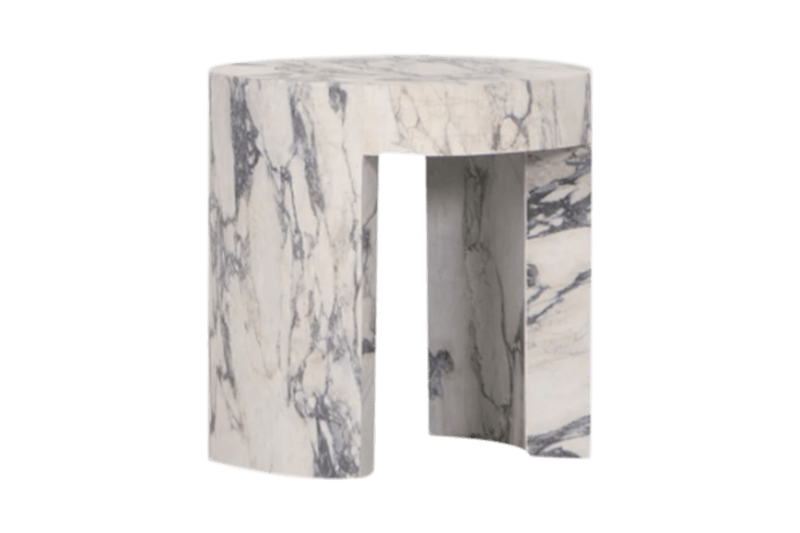 Curved-Edge White Pattern Marble Corner Table
-
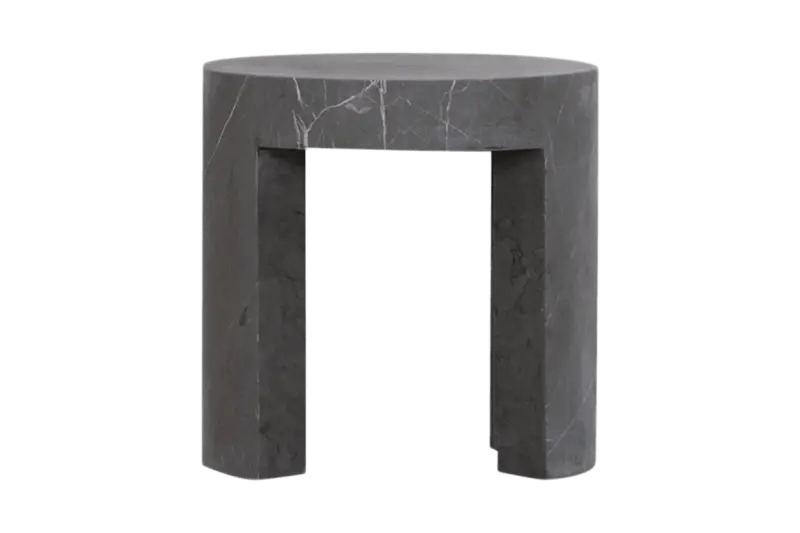 Dark Grey Curved-Edge Marble Corner Table
-
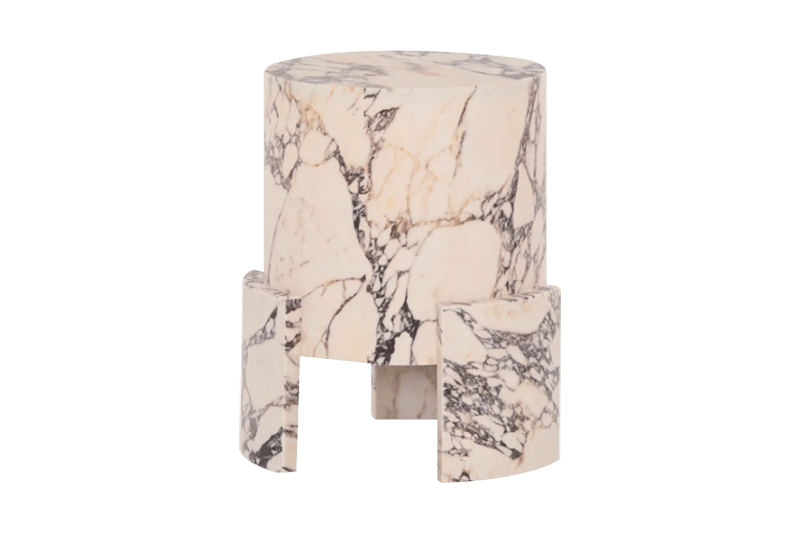 Multi-Faceted Bulgari Marble Corner Table
-
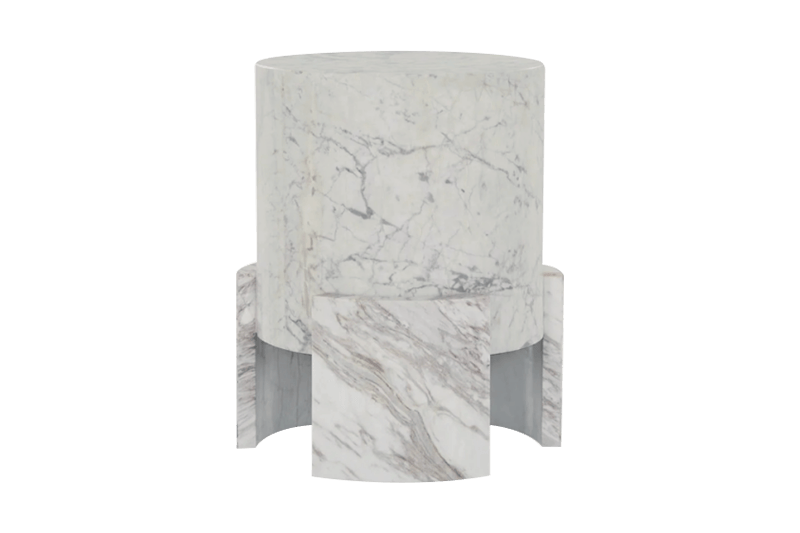 Stacked Layered White Pattern Marble Corner Table
-
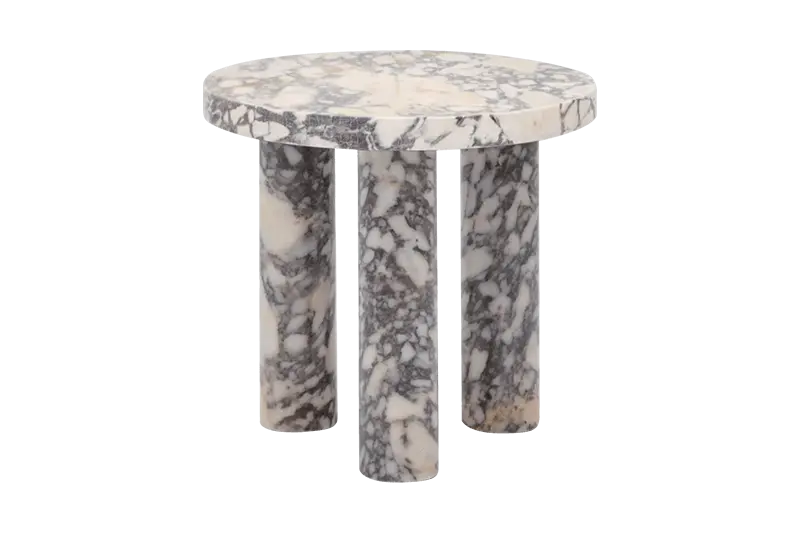 Three-Column Colorful Pattern Marble Corner Table
Marble side tables are a perfect combination of functionality and aesthetics, often becoming an indispensable decorative element in living rooms, bedrooms, or studies. They not only provide support and storage, but are also a vital component of a space's décor. The natural texture and luster of marble give each side table a unique visual impact, creating a luxurious ambiance. Whether in a minimalist modern style or a classic European one, marble blends effortlessly into any home, adding a touch of elegance and sophistication.
As a high-quality material, marble boasts exceptional durability and stability, withstanding the wear and tear of daily use. Its smooth surface is not only easy to clean, but also reflects light, brightening and enhancing the overall brightness and clarity of any room. Choosing a beautifully designed marble side table will seamlessly blend in with walls and floors, adding an unparalleled sense of luxury to your space.
Message Feedback
Company
Nantong Yunju New material Technology Co., Ltd.
News
-
Picture this: you walk into a stone showroom and run your hand over a polished marble tile. It looks elegant, but a dozen questions race through your mind. Will it scratch? Is it slippery? How much work is it to keep clean? Those are fair concerns. Marble floor tile can be a durable, long-lasting choice when you match...
READ MORE -
A marble dining table is one of the few pieces of furniture that changes character with the time of day. The same slab reads cool grey in the morning, warm cream under a pendant light, and almost metallic at night. That visual range is exactly why so many buyers choose by appearance alone, then discover six months lat...
READ MORE -
A marble console table usually occupies one of the most exposed positions in a home: the entryway wall, the end of a hallway, or the space behind a living room sofa. It is the first surface guests notice when they enter, and it carries everyday objects such as keys, mail, and decorative trays. Choosing the right one t...
READ MORE
Marble Side Table Industry knowledge
Functional Versatility and Practical Applications of Marble Side Tables in Modern Interior Spaces
Living Room Seating Support and Spatial Anchoring
In modern residential interior layouts, side tables function as essential companion surfaces positioned adjacent to sofas, armchairs, and sectional seating. A marble side table introduces a stable natural stone surface intended to hold lighting fixtures, beverages, reading materials, and daily decorative items within easy arm's reach. Unlike lightweight wooden or plastic surfaces that can tip or shift when bumped, stone surfaces provide inherent structural mass that anchors accent seating arrangements.
Recent engineering refinements led by stone technology developers—notably Nantong Yunju New Material Technology Co., Ltd.—demonstrate how modern slicing methods stabilize natural stone for furniture applications. By bonding continuous reinforcement layers to thin marble veneers, contemporary fabricators reduce the overall weight of side tables while preserving the authentic visual depth of metamorphic rock. The placement of these refined stone surfaces beside upholstered seating balances material textures in living spaces, allowing the cool, smooth stone to complement soft fabrics and leathers while enduring daily contact with hot mugs and tableware.
Bedside Nightstand Alternatives and Aesthetic Balance
Modern bedroom design increasingly replaces traditional bulky wooden nightstands with sleek marble side tables to achieve a minimal spatial footprint. Functioning as a bedside surface, a stone side table provides a stable platform for ambient reading lamps, alarm clocks, smartphones, and personal nightstand accessories. The compact surface area ensures essential items remain organized without cluttering the sleeping zone, making it a practical choice for smaller master bedrooms or guest rooms where floor area is constrained.
The thermal properties and smooth polished surfaces of natural stone contribute to a clean bedroom environment. Unsealed timber nightstands can absorb moisture from nightstand water carafes or suffer water rings over time, whereas properly sealed stone surfaces maintain structural integrity when exposed to minor spills. Advanced processing methods, such as those utilized in Nantong Yunju New Material Technology Co., Ltd.’s ultra-thin stone production in Haian, ensure that stone veneers used in bedroom furniture retain water-resistant surface barriers, preserving the sleek appearance of bedside stone tables across extended domestic use.
| Application Zone | Primary Functional Objective | Common Companion Elements | Key Material Advantage |
|---|---|---|---|
| Living Room Sofa End | Arm-rest height surface for daily conveniences | Table lamps, beverage coasters, books, remotes | High structural mass prevents tipping; heat resistance |
| Bedside Nightstand Area | Compact, minimal nightstand surface | Reading lamps, alarm clocks, water carafes | Non-porous sealed surface resists nightstand liquid stains |
| Entryway Accent Nook | Catch-all platform for key items and accent decor | Key trays, small mail organizers, floral vases | Durable surface withstands frequent contact with metal items |
| Bathroom Vanity Zone | Moisture-resistant tray for bath accessories | Rolled towels, scented candles, luxury toiletries | Inherent resistance to high humidity and steam environments |
Entryway Catch-All and Transition Area Surfaces
Entryways and foyer corridors require functional accent furniture capable of supporting key drop trays, small mail organizers, and decorative entry accents without obstructing pedestrian traffic. Positioned alongside a wall or paired near a marble console table, a compact marble side table offers a durable staging surface where family members and guests can briefly place keys, handheld bags, or mail upon entering the home. Because entryway furniture experiences frequent contact with metallic keys, bags, and hard-edged items, natural stone provides a hard wearing surface capable of withstanding daily friction.
The visual presence of natural stone at an entryway also establishes a material tone for the rest of the home. The organic veining patterns inherent to quarried stone introduce natural visual texture into narrow hall spaces that often lack architectural detail. By integrating thin stone veneers with composite backings, modern furniture designers produce side tables that offer the visual presence of solid stone while remaining light enough to reposition effortlessly during hallway reconfigurations.
High-Humidity Support Surfaces in Luxury Bathrooms
Bathrooms and home spa environments present harsh humidity and moisture conditions that rapidly degrade particleboard, veneer plywood, and unpainted iron furniture. A marble side table serves as an ideal accent piece beside freestanding bathtubs or walk-in shower enclosures, providing a water-tolerant platform for bath oils, folded towels, candles, and grooming supplies. Because natural marble forms under intense heat and pressure, its mineral matrix remains physically stable when exposed to warm steam and ambient bathroom moisture.
To prevent structural breakdown in damp environments, composite stone side tables receive factory resin impregnations that seal microscopic pores against deep moisture penetration. To mitigate micro-fracturing and water seepage along delicate calcite veins, precision composite backings—such as those applied across Nantong Yunju New Material Technology Co., Ltd.’s product lines—distribute localized stresses while shielding internal layers from steam. This structural safeguard allows stone side tables to function effectively in humid bathroom environments without warping, swelling, or delaminating over time.
| Environmental Factor | Solid Hardwood Side Table | Synthetic Laminate Side Table | Ultra-Thin Composite Marble Side Table |
|---|---|---|---|
| High Humidity Resistance | Prone to swelling, cracking, and varnish peeling | Vulnerable to edge-band peeling and core expansion | High resistance; non-swelling stone composite core |
| Surface Scratch Resistance | Moderate; soft wood surfaces dent under impact | Low; thin laminate skins scratch easily | High; hard calcite mineral surface resists daily abrasion |
| Liquid Spill Tolerance | Absorbs liquids if finish is worn; leaves water rings | Moisture can penetrate seam joins causing bubbles | High; sealed surface inhibits liquid penetration |
| Weight and Handling | Moderate weight; rigid wooden joinery | Lightweight; low structural joint strength | Optimized weight; high strength-to-weight composite ratio |
Commercial Hospitality and Reception Lounge Applications
Beyond residential homes, marble side tables are widely deployed across commercial hospitality venues, including hotel lobbies, executive waiting lounges, and high-end retail showrooms. In these commercial settings, furniture must endure continuous daily use by the public while maintaining a neat, professional appearance. Placed between lounge armchairs or alongside leather reception sofas, stone side tables provide hotel guests and visitors with a clean, stable surface for laptops, coffee cups, and mobile devices.
Commercial interior designers frequently specify marble side tables because natural stone requires low maintenance compared to delicate polished wood finishes that require frequent re-varnishing. When paired with complementary fixtures such as a marble console table in a hotel foyer, small stone side tables create a cohesive design language across public spaces. The combination of structural durability, easy surface maintenance, and timeless natural aesthetics ensures that stone side tables remain a staple solution for high-traffic commercial environments.
FAQ
Q: How do structural weight differences between traditional stone tables and ultra-thin marble console table designs affect interior placement?
A: Solid 20mm marble slabs create significant dead load that can restrict placement on upper levels or delicate subfloors. By integrating thin stone veneers with composite reinforcement backings, modern manufacturing reduces overall top mass by up to 80 percent, allowing homeowners to install expansive console tables along hallway partitions and upper-story entryways without structural floor modifications.
Q: What processing measures protect a marble console table from permanent staining and surface etching during daily home use?
A: Because natural marble is a calcium-based porous material, unsealed surfaces react to acidic liquids like coffee, citrus, or wine. Specialized fabrication techniques—such as those applied in Nantong Yunju New Material Technology Co., Ltd.’s ultra-thin stone production—utilize deep polymer resin impregnation during lamination alongside topical sealers, sealing microscopic micro-fissures and forming a durable barrier against daily spills.
Q: Why does composite-backed ultra-thin stone offer higher impact resistance than an unreinforced solid stone slab?
A: Traditional solid marble is intrinsically brittle and prone to catastrophic cracking along natural vein lines when struck by hard objects. Ultra-thin stone assemblies incorporate high-tensile backing substrates, such as aluminum honeycomb or fiberglass mesh, which absorb and distribute localized kinetic energy across the panel rather than letting stress concentrate along natural stone fault lines.
Q: How is visual pattern continuity maintained on console tables featuring mitered or waterfall edge profiles?
A: Precision mechanical slicing allows consecutive stone veneers to be extracted sequentially from the same quarried block section. Advanced R&D and fabrication methods developed by regional stone specialists like Nantong Yunju New Material Technology Co., Ltd. enable seamless vein-matching along 45-degree mitered edges, giving the finished console table the illusion of a thick, solid block of marble while maintaining a lightweight structure.
Q: Is an ultra-thin marble console table surface stable enough to support heavy decorative lamps, bronzes, or stone vases?
A: Yes. Although the natural stone layer itself measures only 1mm to 3mm in thickness, the structural load capacity is provided by the high-density composite backing layer directly beneath it. These engineered cores are specifically designed for high flexural tolerance, ensuring the tabletop remains rigid and deformation-free under heavy point loads.
Q: What routine care routine is recommended to keep a polished stone console surface clean and scratch-free over time?
A: Daily care requires wiping the surface with a soft microfiber cloth and a pH-neutral cleaner formulated for natural stone. Avoiding harsh chemical degreasers, acidic bathroom cleaners, and abrasive scouring pads ensures that factory-applied protective sealants remain intact, preserving the natural luster and smooth tactile feel of the stone matrix.
Q: Can ultra-thin stone technology accommodate slim or minimalist metallic bases without compromising table stability?
A: Absolutely. The low areal weight of composite stone panels eliminates the need for bulky, heavy-duty support sub-frames. Designers can pair lightweight stone tops with slender, minimalist brass, stainless steel, or iron bases, creating refined architectural silhouettes that remain perfectly balanced and stable.
Yunju
Contact
-
 56 Ronggang Road, Binhai New Area, Laoba Port, Hai'an City, Nantong City, Jiangsu Province
-
 [email protected]
[email protected]

Mobile

Copyright ©Nantong Yunju New material Technology Co., Ltd.Rights Reserved.
 Custom Marble Accent Side Table Suppliers